Draft
- Antatetiambo is a 35-hectare nature reserve in the Andapa Basin, northeast Madagascar.
- Focused on conservation, education and sustainable development.
- 6km from Andapa,
- A walk, taxi or bicycle ride on rural sand roads with stunning scenery in all directions leads to the tiny village of Matsobe at the confluence of the Andramonta and Ankaibe rivers. From there, Rabary can meet you and show you the reserve and local area.
- Tents are available for rent make an overnight visit to observe to observe the nocturnal wildlife.
- Located on a densely forested hill amidst a vast expanse of rice fields.
- A sanctuary for the remarkable variety of plants and animals endemic to the area.
- Once a virgin forest, harbouring some of the richest biodiverity in Madagascar, much of the land was cleared many decades ago by colonists who cultivated coffee. Later portions were yearly to grow different crops.
- Under its current protection and intense reforestation efforts, the land is gradually reverting to its former natural state.
- Giant bamboo and wild ginger support a healthy population of bamboo and mouse lemurs.
- Growing population of native pallisandre, rosewood and ebony trees.
- The forest is home to many species of birds, including herons, sunbirds and owls as well as a variety of reptiles and amphibians.
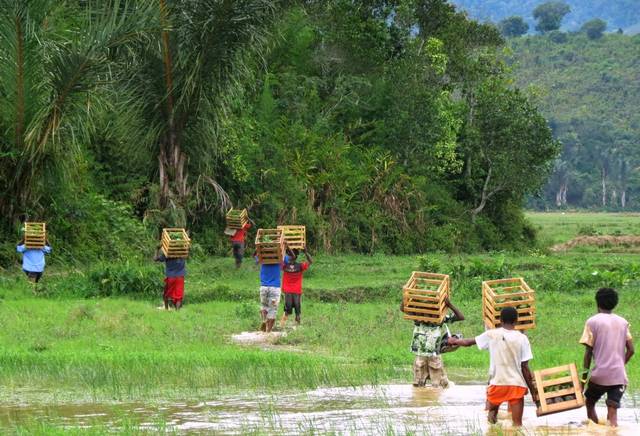
- In much of the surrounding flatlands, rice is farmed in irrigated rice fields using age-old non-mechanised methods.
- A pastoral and tranquil landscape with a timeless feel of gentle Malagasy culture. A visit to Antanetiambo is a journey into the past that allow one to witness natural regeneration of a tropical rainforest with all its remarkable biodiversity and to see the centuries-old traditions of people living simply on the land.
- Rich in biodiversity.
- The only reserve created from start to finish by one local resident's vision of preserving a bit of natural and cultural history of the Andapa Basin.
- Working together with the local community of Beloko-Marovato.
- Supported by the Lemur Conservation Foundation and the Association des Partenaires ecotouristiques.
- Construction of tree nurseries for reforestation.
- Construction of a fish farm.
- Community library (where?)
- Tours in English, French and Malagasy.
- Conservation projects include the monitoring of the Northern Bamboo Lemur (Hapalemur occidentalis), Paratilapia fish farming, duck rearing and breeding, Bok choy farming ("petsay")
- Some portions of flatlands around Antanetiambo, such as Anjojorabe, are also managed by Rabary, and once again, supporting native wetland flora and fauna as they did hundreds of years ago.
Contents
2016
- A fish farming and reintroduction project funded by LCF involved building a model fish pond in Ambodivohitra. The fish species, Paratilapia, is endemic to the area and has become rare in rivers. Nearly 4,000 fish were harvested including 300 adults which were sold at 15,000 Ar per kg. About 2,000 fishlings were reintroduced into the large Lokoho River which is known to be a suitable habitat.
- The Antanetiambo Library with English literature and an English teacher, Mr Dimbysoa, Desire's brother was established, hosting twice-weekly classes for students from Belaoka-Marovato.
2014
- Habituation was been achieved. The northern bamboo lemur group (Hapalemur occidentalis) was found each day.
- More than 11,000 seedlings in 20 different (primarily native) species have been grown in Antanetiambo's tree nursery. These include endemic hardwoods such as Ebony and Hintsia, fast-growing endemics such as Albizia sp. and Criptocarya sp., super-fast growing Acacia, fruit trees such as Lychee, Banana, and Jack Fruit, and native bamboo. As rainy season (January to April) has just arrived, we have started planting about 1000 trees per week inside some of the newly purchased degraded parcels of Antanetiambo Nature Reserve.
2013
Volunteers from the CARE NGO led a three day Yam ("Ovy-be") and Tarot ("Sahogo)" growing training for villagers from nearby Belaoka in the Antanetiambo Library.
Yams can weigh as much as 25kg, containing more fibre than rice, and are easy to grow, and may serve as an important fallback food source during the season of rice shortage.
Though tarot does not reach the huge size of yams, it is considered the tastiest of the local tubers, and is the most valuable, selling for a high market price.
Both yams and tarot are actually much healthier than manioc/cassava which is widely consumed though it is known to directly contribute to goiter (b/c it blocks iodine uptake) and actually contains high levels of cyanide (particularly the leaves) requiring considerable processing to diminish!
Yam and Tarot training in Antanetiambo
First Fish Harvest Very Successful! As one of our anti-bushmeat hunting programs, we have been breeding a locally endemic fresh water fish called Fony (Paratilapia polleni) at several sites around Marojejy. In September 2012, 400 tiny fishlings were introduced in our model pond in Ambodivohitra. In July 2013, we harvested over 1700 fish including more than 200 large adults which sold for 10,000AR/kg! 600 juveniles were reintroduced into the Matsobe River.
Breeding endemic Paratilapia fishes
NEW Toilet and Shower! Antanetiambo now has better toilets and shower than Marojejy which should help boost tourism and research.
Tremendous reforestation! Duke Lemur Center planted 4290 trees in Antanetiambo this year and funded US Peace Corps Volunteer Nicholas Reed Krase to plant an additional 2666 trees. A mix of rare endemics (rosewood/ebony), fast growing endemics (hintsia, famelona, tafonana) and fruit trees (litchi, mango, jack fruit, avocado) were planted.
Antanetiambo Grows in Size! Reserve founder Desiré Rabary has expanded the size of the nature reserve. Since he won the “Seacology Prize” (an international environmental prize which included a cash award of $10,000 USD) in 2010, he has been buying land to increase the size of his reserve. SIMPONA has also funded some of these land parcel purchases. In the past two years he has impressively negotiated several large land purchases, increasing the size of the main reserve (now roughly 35 acres) by about 40% and obtaining several satellite parcels of rainforest along the east side of Marojejy National Park.
In the near future, the Duke Lemur Center SAVA Conservation project will assist him in obtaining formal legal land title for his reserve.
2012
Researchers identified 13 species of frogs, such as the Boophis tephraeomystax, Heterixalus andrakata, Ptychadena madagascariensis and a miniaturized narrow-mouth frog, Stumpffia sp. The latter one is among the smallest vertebrates in the world.
The snake fauna is rich in individuals and species. Together with Rabary’s observations, the snake list comprises of seven species: the colubrids Bibilava lateralis and B. stumpffi, Dromicodryas quadrilineatus, Leioheterodon madagascariensis, Pseudoxyrhopus microps and the two boids Acranthophis madagascariensis and Sanzinia madagascariensis.
The chameleon Furcifer pardalis and the green day gecko Phelsuma pusilla are common.
A local library in Matsobe-Sud was created, with books in Malagasy, English and French.
The library is open seven days a week to the public everyday.
New Paratilapia Fish Farm Pond funded by SIMPONA and Duke Lemur Center. A new large fish farm project has begun which is one of Duke Lemur Center's largest projects in this region, and is a close collaboration with local fish expert Mr. Guy Tam Hyock.
The goal is to encourage Paratiliapia (an endemic, tasty, and easy to breed fish) as an alternative source of protein to help reduce the need for bushmeat hunting in Marojejy. Raised Paratilapia were reintroduced into local rivers where they have become nearly extinct.
2011
Two gravity-fed water taps have been installed in the village of Matsobe-Sud, making clean water available to families near Antanetiambo Nature Reserve. Many thanks to our wonderful donors and Madagascar National Parks for their support of this project!
2008-2009
Creating a nature and language learning library for the Rural Commune of Belaoka-Marovato
Antanetiambo staff collaborated with the local community and the middle-school of Belaoka to establish a tri-lingual library with Malagasy, English and French language books, encyclopedias and dictionaries about natural world, improved agriculture, skill development, language learning, as well as story books. The teachers and students of the Collège Elite de Belaoka help us to care for this library. Special thanks to the Norvig family for their gracious donations of books and supplies.
Antanetiambo cooperative members, in partnership with friends in the United States, worked with local tailor to host a three-week sewing and tailoring workshop for the motivated women’s cooperative of Ambodigavo village. The ladies of Ambodigavo are currently learning to embroider patches for sale at the Reserve.
Coordinating an SRI-conservation through improved rice farming project with the women of Antananbaobe village
Antanetiambo has collaborated with the Antananbaobe Village Womens Cooperative and BOSCO, a local agricultural extension agent, to provide training and material support in farming a one-hectare SRI improved rice cultivation demonstration plot. With this plot, we hope to show the community that planting using the more efficient SRI method produces a superior rice yield. Increasing rice production in lowland irrigated areas will ideally reduce reliance on slashing-and-burning forested hillsides for inefficient “an-tanety” rice farming.
Encouraging villagers to feed their families while protecting the forest, critical watersheds and preventing topsoil erosion is our goal!
Developing two gravity-fed clean water taps for the village of Matsobe-Sud
Antanetiambo Reserve is collaborating with Association des Partenaires Ecotouristiques President Louis Toto and local engineer FABIOLA to extend an existing forest-source water line to our host community in Matsobe village.
Antanetiambo cooperative member Louis Toto has worked with a local Peace Corps Volunteer to translate and produce a series of environmental radio broadcasts on the ecology and conservation of flagship lemur species to air on the Andapa radio. These broadcasts have played on the Wildlife Conservation Society’s Projet Makira Radio Vary Mangitry timeslot.
More
- Entrance fee: ?? / Guide fees: ?? / Lunch: ?? / Bicycle: ?? / Vehicle: ?? (4 passengers)
Video
The 2010 Seacology Prize recipient is Mr. Rabary Desiré of Madagascar. On an island of immense poverty and rapidly diminishing natural resources, Mr. Desiré is a leader in conservation. A highly sought-after research and ecotourism guide in northeastern Madagascar, Mr. Desiré has dedicated his life to preserving Madagascar's natural resources. He established his own private conservation area, the Antanetiambo Nature Reserve. Located on a former coffee plantation, Antanetiambo Reserve is an inspiring example of successful reforestation, and today provides critical habitat for many of the island's endemic species. Mr. Desiré is a self-taught ecologist who has become an expert on Malagasy flora and fauna, especially the critically endangered Silky Sifaka lemur. He has also been active in investigations and condemnation of the illegal rosewood logging threatening the region's forests. For his lifelong dedication to conserving Madagascar's biodiversity, Mr. Rabary Desiré is awarded the 2010 Seacology Prize. For more information, please visit: http://www.seacology.org/prize/index.htm
https://www.youtube.com/watch?v=gu33LgqWIA8
The Antanetiambo Nature Reserve is a 35-hectare nature preservation area within the Andapa Basin in northeast Madagascar.

| ||

|

|

|

|

|

|
Location
The Andapa Basin is a geological formation about 500m above sea level which millenias ago formed a lake, wetland and rainforest teeming with wildlife.
Today, the former seabed, circumventing about 60km over an area of 180 km² is encircled by mountainous landscapes between the Anjanaharibe and Marojejy massifs.
???
The long-forgotten lake would have included several islands and islets, one of them being the present-day hill of Antanetiambo Nature Reserve (Antanetiambo meaning the on the high hill). Covered in a thick bamboo forest, ascending 80m, surrounded by rice paddies, this small protected forest is a habitat of the Northern Bamboo lemur among a wide variety of native and endemic species of flora and fauna.

The area of Andapa only became permanently inhabited as late as the 19th century by Tsimihety ethnic group, seeking refugee from the Merina tribe of the central highlands. Inhabitants of this newfound land began farming the highly fertile soil, enriched by the surrounding rainforests. During the French colonisation period, the area was also used to cultivate coffee and other crops. It was not until the 1960s Andapa became easily accessible to the rest of the country by a good road.
The nearest domestic airport is Sambava, 100 kilometres from Andapa. Visitors can now reach Andapa from Sambava by car in about three hours to appreciate the incredible beautiful scenery and countryside dotted with small rural villages connected by trails and sand roads, no tarred roads, no industrial facilities. A place where agriculture is done the same way it has been for done centuries, by man and ox-power. For the foreign visitors, it's a journey into the past.
Dedicated efforts of Rabary and sponsoring organizations, such as, Lemur Conservation Foundation and …, has ensure important flora and fauna is being restored and maintained to support the fragile ecosystem. Rabary and his team's achievement are many: ...
Apart from a handful of researchers, volunteers and NGOs active in the nearby national parks, the area is rarely visited by foreign tourists, in part because the road trip does not usually fit into to typical busy time schedules and travel itineraries. Few tour operators, except individual guides and specialist tour operators, have detailed knowledge of the area and offer travel packages.
History
The surrounding flatland, once a virgin forest harbouring some of the richest biodiversity in Madagascar, was mostly cleared by colonists who cultivated coffee decades ago. Later, portions were burned to grow a variety of crops. Nowadays, much of the area is used to cultivate rice, among other crops. Farming is done in traditional ways without using fertilisers harmful to the environment, powered by man and zebu ox-ploughs. To the outsider, it's a journey into the past with centuries-old traditions of people living simply on their land. Fortunately, none of the areas has been industrialised. No tarred roads, no traffic. Countryside roads and trails are more suited for walking or biking than for motor vehicles.
The reserve was founded in 2009 by local guide and naturalist Désiré Rabary on former agricultural land, which he began purchasing and reforesting with the help of various conservation partners.
Flora and fauna
Antanetiambo include four bamboo species, which in all make up most of the diet of the the northern bamboo lemurs (Hapalemur occidentalis): Phyllostachys aurea (Chinese fishpole bamboo), Dendrocalamus strictus, and the native Valiha diffusa and Arundinaria sp. (known locally as "volontsangana").
Conservation efforts at Antanetiambo focus on expanding the presence of the native Valiha diffusa, which is presumed to be the primary diet of bamboo lemurs in nearby primary forests like Marojejy National Park.
Giant bamboo and wild ginger support a healthy population of bamboo and mouse lemurs.
There is also native pallisandre, rosewood and ebony trees.
And the forest has become sanctuary to many species of birds, including herons, sunbirds and owls as well as a variety of reptiles and amphibians.
The list of serpents include seven species: The colubrids Bibilava lateralis and B. stumpffi, Dromicodryas quadrilineatus, Leioheterodon madagascariensis, Pseudoxyrhopus microps and the two
nonvenomous constrictors boa constrictors Acranthophis madagascariensis and Sanzinia madagascariensis.
The Furcifer pardalis chameleon and the green day gecko Phelsuma pusilla are also common.
| Scientific name | English name | Malagasy name |
| Hapalemur occidentalis | Northern Bamboo Lemur | ??? |
The founder
Mr. Rabary Desiré of Madagascar, research and ecotourism guide has dedicated his life to preserving Madagascar's natural resources. Rabary is a self-taught ecologist and expert on Malagasy flora and fauna. He was awarded the 2010 Seacology Prize, which included a $10,000 price, which he used to further expand the land his conservation project.
Ecotourism
Achievements and projects
Partners
More
- Download via yt-dlp https://www.youtube.com/watch?v=gu33LgqWIA8 -S res,ext:mp4:m4a --recode mp4
- https://andapa.marojejy.com/Intro_e.htm
- https://www.researchgate.net/figure/Map-of-the-Andapa-Basin-and-its-montane-system-including-Anjanaharibe-Sud-and-Marojejy_fig4_226385087
- https://cnlegis.gov.mg/uploads/D2015-729-annexe1.pdf
- https://antanetiambo.marojejy.com/Visite_e.htm
Antanetiambo Nature Reserve is a locally managed 35-acre forest in the Andapa Basin, created by Mr. Désiré Rabary, offering cultural and wildlife experiences.

Antanetiambo
Andapa
Madagascar
File:Antanetiambo Bamboo Forest, Andapa, North Madagascar.mp4
Additional information
Welcome to Antanetiambo Nature Reserve, a small locally managed forest set in the lush ricefields of the Andapa basin. Mandrosoa!

This 35 acre rainforest reserve, created by the famous ecotourist guide and highly respected naturalist Mr. Désiré Rabary, offers visitors an opportunity to learn about the cultural values and practices of the Tsimihety people while observing endemic wildlife. This is the only reserve in northern Madagascar that has been entirely created from start to finish by a single local resident. The site has developed into a mini-conservation hub where collaborators, such as Lemur Conservation Foundation, have worked with him to develop ecotourism, foster conservation of the bamboo lemurs, build a model fish farming pond, reforestation tree nurseries, and a community library. This short film overviews the reserve and the accomplishments of Désiré Rabary:
http://www.youtube.com/watch?v=gu33LgqWIA8

Tours may be conducted in English, French, or Malagasy. Antanetiambo is family managed and visitors are encouraged to stay and share a traditional meal prepared by Mrs. Valerie Doko at the family’s home in Matsobe. Organic, high quality, locally grown vanilla is also available for purchase.

image captions:
* Asio madagascariensis
* Madagascar Owl (Asio madagascariensis)
* in Antanetiambo Nature Reserve


The Antanetiambo staff is happy to accommodate visitors' specific interests by designing a personalized visit. A range of possible activities includes: searching for bamboo lemurs, birds, and reptiles in the reserve; visiting the large Paratilapia fish farm, learning traditional rice and other farming practices, bicycling through picturesque countryside, or spending time in the community library where foreigners can always be of assistance and interest to local students. Many people simply enjoy discussing the challenges of establishing a new protected area with reserve founder Désiré Rabary. Please contact us in advance if you would like to engage in these or other activities: Contacts

Antanetiambo has become a conservation hub in recent years as Lemur Conservation Foundation have teamed up with reserve founder Désiré Rabary. Through these collaborations, Désiré has in recent years expanded the size of the reserve by about 40% by purchasing adjacent parcels.

However, he needs funds to continue expanding his reserve. A variety of conservation projects are being pursued, and visitors are encouraged to visit our projects, such as: 1) Long-term monitoring of Northern bamboo lemurs, 2) Paratilapia fish farming, 3) Duck rearing and breeding, 4) Community library, 5) Reforestation, and 6) Bok choy farming ("petsay").

Antanetiambo's Main Staff Members are pictured below. On the left is Désiré Rabary with Nadege the librarian; in the middle is William who is the fish pond guardian and caretaker, and on the right is Ramichael, the park ranger for Antanetiambo Reserve.

Set amidst a vast green expanse of marshlands and rice fields, Antanetiambo is a densely wooded hill, rich with wildlife. This unique and beautiful spot is the result of one man’s extraordinary efforts to preserve a bit of the natural and cultural history of the Andapa Basin in northeastern Madagascar. Working together with the local community of Belaoka-Marovato, local environmentalist and guide Mr. Rabary Desiré has created a sanctuary for the remarkable variety of plants and animals native to the area, as well as a natural laboratory for their study and enjoyment.

Antanetiambo has a long history. Once virgin tropical rainforest harboring some of the richest biodiversity in Madagascar, much of the land was cleared many decades ago by colonists who farmed coffee; later, portions of it were burned yearly to grow a variety of crops. Under its current protection as a nature reserve, however, and with the help of an intensive reforestation project, the land is gradually reverting to its former natural state. Stands of giant bamboo and wild ginger are well established and support healthy populations of bamboo and mouse lemurs, and a growing population of native palissandre, rosewood and ebony trees. Many species of birds, including herons, sunbirds, kingfishers and owls make their home here, as well as a great variety of reptiles and amphibians.

Désiré Rabary leads trip to the summit of the Marojejy Massif

In much of the flatlands that surround Antanetiambo, rice is farmed in irrigated fields using age-old, non-mechanized methods. It is a pastoral and tranquil landscape, with the timeless, gentle feel of the Malagasy culture. Some small portions of these flatlands around Antanetiambo, such as Anjojorobe, are now also managed by Mr. Rabary as natural areas, and they once again support native wetland flora and fauna as they did hundreds of years ago.

This is the charm and the fascination of Antanetiambo: a visit to Antanetiambo is a journey into the past, a journey that allows one to witness the natural regeneration of a tropical rainforest with all its remarkable biodiversity, and to see the rich, centuries-old traditions of a people living simply on the land. Antanetiambo has many beautiful stories to tell.


Image captions:
* Hapalemur occidentalis
* Northern Bamboo Lemur (Hapalemur occidentalis)
* in Antanetiambo Nature Reserve

Located only six km from the town of Andapa in northeastern Madagascar, Antanetiambo makes a perfect day or overnight excursion. A short bicycle or taxi ride through the rice fields of the Andapa Basin leads to the tiny village of Matsobe at the confluence of the Andramonta and Ankaibe rivers. A small “hotely” in Matsobe provides refreshment and information on the reserve. From here, a guide (often Mr. Rabary himself, speaking excellent English and French) will be delighted to show you the reserve and the local area. Many activities can be arranged, from lemur viewing in the forests of Antanetiambo, birding in the wetlands of Anjojorobe, pirogue rides on the Andramonta River, and bicycle rides through the surrounding countryside. You are welcome to camp out at the reserve, if you like; tents may be available for rent, please inquire. Bungalows and other overnight facilities are planned for construction.

Access and Bookings

Antanetiambo Nature Reserve may be accessed by traveling by taxi brousse or private vehicle from Sambava (airport) to Andapa. From Andapa, hire a private taxi or bicycle/walk 5 km north to Matsobe-Sud/Commune Rurale Belaoka-Marovato.

Hapalemur occidentalisMouse Lemur (Microcebus sp.) in Antanetiambo Nature Reserve

2019 Tariffs

    Entrance fees:
    30 000Ar.
    Guide fees:
    40 000Ar.
    Lunch:
    Fixed price - 20 000 Ar.
    Bicycle:
    One way - 5 000 Ar.
    Vehicle:
    One way - 15 000 Ar. (4 seats available)

Our Conservation and Community Development Projects

Antanetiambo is managed by a motivated local cooperative focused on conservation, education, and sustainable development in the villages surrounding Antanetiambo Nature Reserve. This cooperative, the local Association des Partenaires Ecotouristiques, has collaborated with the Belaoka-Marovato community to complete a range of social and environmental improvement projects (see slide shows below). Most staff and projects are primarily funded by Lemur Conservation Foundation

2016

Successful Fish Farm Harvest and Reintroduction

This year Lemur Conservation Foundation organized the annual Paratilapia fish harvest from our model fish pond in Ambodivohitra. This species is locally endemic to this region and has become very rare in local rivers. In total nearly 4000 fish were harvested including over 300 adults which were sold for the high price of 15,000 AR per kilogram (approx. $5 USD). About 2000 fishlings were reintroduced into the large Lokoho River which is known to contain some suitable habitat.

Fish Ponds


New English Class

The New English Class has been going well in the Antanetiambo Library. It is taught by one of the leading English teachers in the region, Mr. Dimbysoa, who is actually the brother of Desire RABARY and now lives nearby. The class meets twice a week and has been well attended by people from Belaoka-Marovato. Programs such as this help us to engage the local community near the reserve. We are very lucky that the course is taught by a professional and fluent English teacher.


English Class


2014

Habituation has been achieved! The northern bamboo lemur group (Hapalemur occidentalis) is now found each day since the outstanding lemur tracker, Mr. Daniel, has been working with us. The behavior and ecology of this species of bamboo lemur has not yet been studied. It will now be much easier for eco-tourists to observe the group and for researchers to learn more about this virtually unstudied species. It will also be less stressful for the animals.

Désiré Rabary and Daniel


Sleeping Bamboo Lemur - © Dino Raharimanana


More than 11,000 seedlings in twenty different (primarily native) species have been grown in Antanetiambo's tree nursery. These include endemic hardwoods such as Ebony and Hintsia, fast-growing endemics such as Albizia sp. and Criptocarya sp., super-fast growing Acacia, fruit trees such as Lychee, Banana, and Jack Fruit, and native bamboo. As rainy season (January to April) has just arrived, we have started planting about 1000 trees per week inside some of the newly purchased degraded parcels of Antanetiambo Nature Reserve.

Tree nursery with 11000 seedlings

Reforestation in Antanetiambo


2013

Trainers from the ngo CARE led a three day Yam ("Ovy-be") and Tarot ("Sahogo)" growing training for villagers from nearby Belaoka in the Antanetiambo Library. Yams can weigh as much as 25kg, contain more fiber than rice, are easy to grow, and may serve as an important fallback food source during the season of rice shortage. Though tarot does not reach the huge size of yams, it is considered the tastiest of the local tubers, and is the most valuable, selling for a high market price. Both yams and tarot are actually much healthier than manioc/cassava which is widely consumed though it is known to directly contribute to goiter (b/c it blocks iodine uptake) and actually contains high levels of cyanide (particularly the leaves) requiring considerable processing to diminish!

Yam and Tarot training in Antanetiambo


Removing Parasy Parasite eggs at Camp 1 Marojejy

Duke University Undergraduates Join the Antanetiambo Team. For 10 weeks from June to August, DukeEngage (http://dukeengage.duke.edu/) students Cameron Tripp and Sophia Staal lived in Andapa at our Duke house in Andapa and worked on GPS Mapping, Bamboo Lemur Tracking, and at the Fish Farm.

Blog: My Malagasy Summer

Blog: Cameron's trip/


First Fish Harvest Very Successful! As one of our anti-bushmeat hunting programs, we have been breeding a locally endemic fresh water fish called Fony (Paratilapia polleni) at several sites around Marojejy. In September 2012, 400 tiny fishlings were introduced in our model pond in Ambodivohitra. In July 2013, we harvested over 1700 fish including more than 200 large adults which sold for 10,000AR/kg! 600 juveniles were reintroduced into the Matsobe River.

Breeding endemic Paratilapia fishes

NEW Toilet and Shower! Antanetiambo now has better toilets and shower than Marojejy which should help boost tourism and research.

New toilets and shower


Tree Nursery Created by PCV Nicholas Reed-Krase
Tremendous reforestation! Duke Lemur Center planted 4290 trees in Antanetiambo this year and funded US Peace Corps Volunteer Nicholas Reed Krase to plant an additional 2666 trees. A mix of rare endemics (rosewood/ebony), fast growing endemics (hintsia, famelona, tafonana) and fruit trees (litchi, mango, jack fruit, avocado) were planted.

Antanetiambo Grows in Size! Reserve founder Desiré Rabary has considerably expanded the size of the nature reserve. Since he won the “Seacology Prize” (an international environmental prize which included a cash award of $10,000 USD) in 2010, he has been buying land to increase the size of his reserve. SIMPONA has also funded some of these land parcel purchases. In the past two years he has impressively negotiated several large land purchases, increasing the size of the main reserve (now roughly 35 acres) by about 40% and obtaining several satellite parcels of rainforest along the east side of Marojejy National Park. In the near future, the Duke Lemur Center SAVA Conservation project will assist him in obtaining formal legal land title for his reserve.

Preying Mantis in Antanetiambo

2012


Stumpffia sp. in Antanetiambo
Rapid Herpetofauna Survey by researcher Sebastian Wolf. Several parts of the reserve where searched for frogs and reptiles. In total, 13 species are now known from here (some more might be added in future). The frog fauna is rather depauperate due to the lack of ponds and streams. Four species of frogs have been found, the very adaptable Boophis tephraeomystax, Heterixalus andrakata, Ptychadena madagascariensis and a miniaturized narrow-mouth frog, Stumpffia sp. The latter one is among the smallest vertebrates in the world. Interestingly, the snake fauna was quite rich in individuals and species. Together with Rabary’s observations, the snake list comprises now seven species: the colubrids Bibilava lateralis and B. stumpffi, Dromicodryas quadrilineatus, Leioheterodon madagascariensis, Pseudoxyrhopus microps and the two boids Acranthophis madagascariensis and Sanzinia madagascariensis. The chameleon Furcifer pardalis and the green day gecko Phelsuma pusilla are common as well.

SRI Plot. Antanetiambo Nature Reserve planted multiple rice plots showing various methods of rice farming. The four plots contain traditional farming methods, line, square model and then SRI. The plots are all next to each other and allow for local villagers to see how well each methods produces. The rice will be mature in the next few months!

New Library! Thanks to SIMPONA we constructed a local library in Matsobe-Sud. The library contains books in Malagasy, English and French. The library is open seven days a week and is open to the public everyday. SIMPONA also pays the salary of the new librarian, Nadege, who is also the library guardian.


New Antanetiambo Guardian Mr. Ramichel

Environmental Education. Funded by SIMPONA, for a little over 2 months, around 290 students from Andapa and Marovato visited Antanetiambo Nature Reserve. The visits consist of a morning in the forest, learning about plants and animals and acquiring new English vocabulary. The afternoon consists of environmental education in both Malagasy and English. The environmental education sessions discuss topics such as biodiversity, tourism, agriculture, and thinking about the future..

New Reserve Guardian funded by Duke Lemur Center. A new guardian named Ramichel has been hired. He is a local bouncer and a serious and nice man. We expect his full time presence to deter illegal logging of bamboo and various trees in Antanetiambo. Big thanks! to Peace Corps Volunteer Nicholas Reed-Krase for finding Ramichel and supervising his activities.

New Paratilapia Fish Farm Pond funded by SIMPONA and Duke Lemur Center. A new large fish farm project has begun which is one of Duke Lemur Center's largest projects in this region, and is a close collaboration with local fish expert Mr. Guy Tam Hyock.

New fish pond guardian, Mr. William.

The goal is to encourage Paratiliapia (an endemic, tasty, and easy to breed fish) as an alternative source of protein to help reduce the need for bushmeat hunting in Marojejy which has been on the rise. Raised Paratilapia will also be reintroduced into local rivers where they have become nearly extinct.

Students visiting the new library and the reserve

Community members visiting the library

Students from Marovato visiting the reserve and planting trees

Désiré Rabary singing a song with visiting students from CEG Andapa


2011

NEW! Two gravity-fed water taps have been installed in the village of Matsobe-Sud, making clean water available to families near Antanetiambo Nature Reserve. Many thanks to our wonderful donors and Madagascar National Parks for their support of this project!

Our 2008-2009 projects have been:

Creating a nature and language learning library for the Rural Commune of Belaoka-Marovato

Antanetiambo staff collaborated with the local community and the middle-school of Belaoka to establish a tri-lingual library with Malagasy, English and French language books, encyclopedias and dictionaries about natural world, improved agriculture, skill development, language learning, as well as story books. The teachers and students of the Collège Elite de Belaoka help us to care for this library. Special thanks to the Norvig family for their gracious donations of books and supplies.

Booklist (PDF file)

The new library

Coordinating a women’s income-generation project for the village of Ambodigavo

Antanetiambo cooperative members, in partnership with friends in the United States, worked with local tailor Firmin to host a three-week sewing and tailoring workshop for the motivated women’s cooperative of Ambodigavo village. The ladies of Ambodigavo are currently learning to embroider patches for sale at the Reserve.


The Women's Cooperative

Coordinating an SRI-conservation through improved rice farming project with the women of Antananbaobe village

Antanetiambo has collaborated with the Antananbaobe Village Womens Cooperative and BOSCO, a local agricultural extension agent, to provide training and material support in farming a one-hectare SRI improved rice cultivation demonstration plot. With this plot, we hope to show the community that planting using the more efficient SRI method produces a superior rice yield. Increasing rice production in lowland irrigated areas will ideally reduce reliance on slashing-and-burning forested hillsides for inefficient “an-tanety” rice farming. Encouraging villagers to feed their families while protecting the forest, critical watersheds and preventing topsoil erosion is our goal! Special thanks to Kris Norvig and Monika Patel for their generous support.


> Developing two gravity-fed clean water taps for the village of Matsobe-Sud

Antanetiambo Reserve is collaborating with Association des Partenaires Ecotouristiques President Louis Toto and local engineer FABIOLA (in collaboration with the neighboring Commune of Marovato) to extend an existing forest-source water line to our host community in Matsobe village. Matsobe’s 1,050 inhabitants currently rely on the nearby river for all water needs, including drinking, bathing, washing and sharing with livestock. This source is at times unsanitary and could pose a threat to public health in the densely populated region of Andapa. Two public gravity-fed water taps are in the process of being installed to provide clean water to the families of Matsobe and travelers on the road to Ambalamanasy. Sincere thanks to friends in the United States for their generous support in funding materials for this project!

> Producing local bi-lingual public environmental radio broadcasts

Antanetiambo cooperative member Louis Toto has worked with a local Peace Corps Volunteer to translate and produce a series of environmental radio broadcasts on the ecology and conservation of flagship lemur species to air on the Andapa radio. These broadcasts have played on the Wildlife Conservation Society’s Projet Makira Radio Vary Mangitry timeslot. Through these radio broadcasts we hope to convey environmental messages to a wide listening audience of local students and professionals interested in language learning as well as conservation.


-----------------------------------------

The following environmental radio programs are prepared in the Tsimihety
dialect of Malagasy, with accompaniments in English.
By broadcasting select programs that profile regional flagship species and local
area conservation efforts both in Malagasy and in English language, we hope to
convey environmental messages to a diverse listening audience which includes
students and local professionals who wish to learn to speak English, as well as
those who would otherwise tune in to WCS weekly environment-themed
programs.
Scripts and recordings were prepared in partnership with the Association des
Partenaires Ecotouristiques/Antanetiambo Nature Reserve and the Wildlife
Conservation Society’s Andapa satellite office, by a Peace Corps Environment
Sector Volunteer in Andapa, Madagascar.
-----------------------------------------
3
Rachel Kramer Toto Louis
United States Peace Corps Antanetiambo Nature Reserve
BROADCAST 5
Bamboo Lemurs
Radio Vary Magnitry ANDAPA
20 August 2008
Mianatra mafy, miaro ny atiala, mitsinjo lavitra!
Study hard, protect the forest, think to the future!
Androany Atsika Mianatra Momba ny Bokombolo
Today, lets all learn about the eastern grey bamboo lemur (whose scientific name is
Hapalemur griseus)
Mbolatsara e! Zaho dia Mlle Rachel, mpiasan’ ny Corps de la Paix ary tonga eto
zaho niany miaraka amin’ny Andriamatoa Toto Louis, mpiandraikatra ao amin’ny
Reserve Naturelle Prive Antanetiambo, Commune Rurale Belaoka-Marovato.
Good evening! This is Peace Corps Volunteer Rachel and I’m here tonight with
Andriamatoa Toto Louis, one of the members of the cooperative that oversees
Antanetiambo Nature Reserve in the rural commune of Belaoka-Marovato.
Alốhy, niany hariva, atsika hianatra momba ny bokombolo. Agnaragna
scientifique-nazy hoe, Hapalemur griseus.
Tonight, lets all learn about the eastern grey bamboo lemur (whose scientific name is
Hapalemur griseus.)
Ny “bamboo lemur” na bokombolo amin’ny faritanintsika atsignanagna
Madagasikara, dia milanja eoeo dimampolo sy fitonjato grama hatramin’ny iray
kilao. Ny lokony dia mahizigni-aligny ary ny rambony dia mahizigni-aligny matoy.
Ary ny vajihiny dia mazavazava ary fotsy lalandava ny bokony.
The bamboo lemurs of our eastern region of Madagascar weigh between 750g and 1kg.
Their color is mainly gray and they have a dark gray tail, a lighter gray face, and an
almost-white belly.
Ny bokombolotsika dia misy sofigny hely borobory, fohy sogny, ka samihafa be
amin’ny sogny karaha amboan’ny varignena ndraiky varikandana.
4
Our bamboo lemurs have little, round ears and a short snout, very different from the long
dog-like muzzles of black and white ruffed and red ruffed lemurs.
Ny bokombolon’ny faritany antsignanagna amin’ny ity faritry ity dia karazam-
komba farany madiniky amin’ny Madagasikara dia “diurnal” na hoe mpandeha
sady miasa mahatsagna.
The eastern gray bamboo lemur is among the smallest lemur species in Madagascar that
is “diurnal,” or active during the daytime.
Tena mazagna ny bokombolo dia mahery miasa amin’ny mifoha-kiaka na amin’ny
vao maty masoandro. Amin’ny teny englisy, ny biby izay mahery miasa amin’ny
mahizignizigny maraindrainy ndraiky aloha ny filatsaha ny aligny dia sokajigny
hoe “crepuscular” izany hoe “mahery-aligny”. Isaka misy fahafahagna amin’ny
fialandisaka dia mifoha izy, sady mamoaka feo amin’ny aligny. Fa tegna mazagna
na dia zeigny aza zareo magneno amin’ny mahizinizigny amin’ny maraindraigny.
Quite often, bamboo lemurs are most active at dawn and at dusk. In English, animals that
are particularly active early in the early morning and just before night fall, are referred to
as “crepuscular”. Every once in a while, bamboo lemurs may decide to wake up and
“vocalize,” or make sounds, at night. Most often, though, they “vocalize” very early in
the morning.
Ny bokombolo karaha ny amin’ny faritanintsika mandany ny antsasaky ny andro
amin’ny fitadiavan-tsakafo. Tsy mitovy amin’ny varignena ndraiky varikandagna
izay voalohany indrindra mamelontaigna agnambo, agnaty ala, antendrontendrony
ny bokombolo mitady sakafo amin’ny izay hambosandraha agnaty ala.
Bamboo lemurs like those in our region spend half of each day “foraging,” or searching
for food. Unlike ruffed lemurs that primarily feed way up high in the rainforest “canopy,”
or treetops, bamboo lemurs search for food in all levels of the forest.
Eo ho eo valopolo isan’ny jaton’ny bokombolon’ny antsignanagna dia mivelogno
amin’ny valiha na volo. Ny tegna hoaniny dia ny hôvaka amin’ny fotodravi-
mbaliha, ny ravimbao mbola malemy na ny atiny rantsany mbola malemilemy.
Mihinagna ravindraha hafa koa izy, voankajo, felagna, na hovaka ahitry.
Isan’andro ny andiam-bokombolo maharakotro dimanjato metatra anaty ala
amin’ny fitadiavagna sakafo.
About 80% of an eastern gray bamboo lemur’s diet is bamboo. These lemurs particularly
like to eat the bases of young bamboo leaves, soft bamboo shoots, and the pith inside of
bamboo stems. They will also eat other kinds of leaves, fruits, flowers, and grass stems.
Every day, a bamboo lemur group will cover over 500 meters of forest in its search for
food.
Isaka andiam-bokombolo dia voahomagna roa hatramin’ny sivy. Ny andiany vitsy
dia voafetra hahafeno: vantodahiny, vadiny, ndraiky zanany. Ndraikindraiky mety
misy hita andiam-bokombolo mandilatra komba raiky ambin’ny folo. Andiany be
karaha zaigny saiky mazagna misy lahibeny maromaro, ndraiky vaviny.
5
Each group of eastern gray bamboo lemurs is made up of between two and seven lemurs.
Small groups are comprised of a breeding male and female pair and their “offspring” or
young. Sometimes it is possible to see up to eleven of bamboo lemurs in a single group!
Such larger groups are usually comprised of several adult breeding males and females.
Isaka andiam-bokombolo mitaky atiala eo ho eo dimy ambin’ny folo hatramin’ny
roapolo hekitara, arakaraka ny afontriran’ny valiha ampy hahavoky azy
agnatin’ny faritry.
Each bamboo lemur group requires an area of forest between 15 and 20 hectares in size,
depending on the amount of bamboo that is available to eat in that territory.
Ny bokombolo tantsignanagna mahizignialigny dia tegna sarotiny amin’ny toby
fonegnany. Izany hoe tsy ikenjareo ho hisy andiankomba hafa hizedazeda hiray
faritry aminjareo agnaty ala akao. Misy fomba telo famaritanjareo ny faritaniny,
karaha amboa, ndraikindraiky mamany isaka tehiteky ami-tany homboany
mametraka makia magnamariky fa nihinazy ny faritany. Ny bokombolo mampiasa
makia avy amin’aigninazy apetany amin’ny zava-maniry agnatiny faritaninazy
agnaty ala. Mifanohitry amin’ny karazam-komba hafa izay magnano ny faritany
hoanin’ny havagna jiaby. Izikoa misy firafaisagna tafiditry agnaty faritany, ny
bokombolo mitregny ary miezaka mandroaka ny biby hafa any ivelany.
Eastern gray bamboo lemurs are very “territorial” of their home range, which means they
are intolerant of other species sharing their same area of forest. They have three ways of
marking their territory. Just like a dog will sometimes urinate repeatedly along a path it
travels to spread its scent and “mark” that area as “his”, bamboo lemurs use special
glands to “mark” vegetation in their own areas of forest, advertising to others that that
forest belongs to them and no other lemur group. If a competitor enters their home area,
sometimes bamboo lemurs will “vocalize,” or make sounds, and try to chase other
animals away.
Saika matetiky zareo mitady sakafo mivôny ary ny bokombolo tia mandry ambony
kakajo ambony. Agny zareo voaharo helihely amin’ny fihazagna maro na ohatra ny
fosa (agnarany sientifika Cryptoprocta ferox).
Although they often “forage,” or search for food, close to the ground, bamboo lemurs like
to sleep up high in the trees where they are safer from predators such as the fossa,
Cryptoprocta ferox.
Ny loza mitatao amin’ny bokombolo, karaha komba jiaby Madagasikara, dia ny
doro tanety sy ny fandripahana atiala tsy voatagna hoan’ny famboliagna. Na ny
fihazagna komba anatin’ny atiala voaharo karaha ny faritra Makira.
The main threats to bamboo lemurs, as for all lemurs in Madagascar, are the burning of
our remaining rainforests and bamboo forests for unsustainable agriculture, and the
hunting and capturing what lemurs we have left in our protected forests like Makira.
Mba mety ho azonao heritreritry ary aforiagna ny mba mety hisian’ny
andiankomba magnolotro tanantsika Andapa ka tsy hisy mpamono?
6
Can you imagine a day when bamboo lemurs might be seen again very close to our town
of Andapa, in a regenerated forest where there is no hunting? How wonderful that would
be!
Na dia eto amin’ny faritry Andapa aza, dia misy vondrogno miaro ny bokombolo
izay miaigny agnatiny atiala hely marikitry azy. Ary mpizaha tany maro no tonga
amin’ny Commune-njareo mba hianatra momba ny fomba na kolonsaigny
Tsimihety, ary mizaha ny komba sy ny biby samihafa miaigny agnatiny.
Right here in the Andapa region there is a community that is protecting the bamboo
lemurs that live in the small forest near them, and welcoming visitors to come to their
Commune to learn about Tsimihety culture and to visit the lemurs and other wildlife that
live there.
Ity vondrognolono ity dia ao Belaoka, agnatin’ny Commune Rurale Belaoka-
Marovato. Ny “Association des Partenaires Ecotouristiques” (A.P.E.) dia vondrogno
mpikambana an-toearagna avy Andapa na Andapa magnodidigny. Izay miorigny
ao Matsobe. Ny A.P.E. dia mikambagna aminandriamatoa RABARY Desire sy
DOKO Valerie ao Matsobe mba hiaro folo hekitara amin’ny atiala mody-savoko ao
antenin’ny Antanetiambo.
This community is Belaoka, in the rural commune of Belaoka-Marovato. The Association
des Partenaires Ecotouristiques (A.P.E.) is a local organization of partners from Andapa
and the Andapa countryside, who are based in Matsobe. A.P.E. collaborates with
RABARY Desire and DOKO Valerie of Matsobe, to protect ten hectares of regenerating
forest on the hillside of Antanetiambo.
Agnatiny atialan’Antanetiambo, na dia tsy atiala nanahary aza, efa feno hazo
maniry hatramin’ny taogno maro taorian’ny nikapagna azy namboliagna fahizay.
Misy karazam-biby mahafinaritra maro ao Antanetiambo, agnisan’ny zaigny ny
“mouse lemur,” na tsitsihy, sy ny “bamboo lemur,” na bokombolo.
In the forest of Antanetiambo, despite the fact that it is still re-growing after having been
cleared many years ago to grow crops, there are many kinds of wonderful animals,
including populations of mouse lemurs and bamboo lemurs.
Ny mpogniny jiaby ao Belaoka dia mahay tsara be fa fady ny manapaka kakazo, na
malaka raha maniry, na biby avy amin’ny atialan’Antanetiambo. Sady miaro ity
biby, “bamboo lemur”, komba hafahafa (bokombolo) izay miaigny ao. Fiarovagna
ny Antanetiambo, ny A.P.E., RABARY Desire, DOKO Valerie, sy ny mponigny
jiaby agnatin’ny Commune Rurale Belaoka-Marovato, dia samy miara miaro ilay
komba hafahafa. Sady amin’izay koa magnampy ny famokaragna ny vary eny
an’tanimbary manodidiny ny tanety.
All the villagers in Belaoka know that it is forbidden to cut wood, or remove any plants
or animals from the forest of Antanetiambo. By protecting Antanetiambo, A.P.E.,
RABARY Desire, DOKO Valerie, and all of the people who live in the Commune Rurale
of Belaoka-Marovato, are protecting the very special bamboo lemurs that live there.
7
These people are, at the same time, helping the rice to grow in the rice paddies at the base
of Antanetiambo mountain.
Akory ataon’ny atiala mahavita miaro ny famboliam-bary manodidigny azy? Na
dia ohatra aza tsis’sy barrage na tohadrano amin’ny fartira manodidigny Andapa,
ka tsy ampy ny oranandro amin’io faritra io, i Andriamatoa RABARY Desire dia
mahatsapa fa ny tanim-bary manodidiny Antanetiambo dia voatahiry mando
lalandava.
How does allowing the trees at Antanetiambo to regenerate affect rice growing around
the reserve? While many other rice farming areas without barrages in the Andapa region
grow dry and parched when there is too little rain in the region, RABARY Desire has
noticed that the rice fields around Antanetiambo stay better irrigated, even in dry times.
Izany dia nohon’ny kakazo avy ambony tanety magnampy mikajy rano avy
amin’ny fomba fiaignany sy ny habakabaka ka mandrotsaka izaigny amin’ny tany,
ary manapariaka azy amin’ny tanim-bary. Izikoa ny tanety nodoragna ka tonga ny
orandandro, ny riaka mitondra ny nofon-tany, ka manototro beda ny saha.
This is because the trees on the hillside help to capture water in the air through the
process of “transpiration,” and channel it into the soil, eventually running water down to
the rice fields below. Where there are bare hills that have been burned, water is not
channeled into the soil like it would be if there were forest, and when it does rain the top
soil is eroded away and transported to low areas, filling rice fields with sediment.
Farany, ny fanagnagna kakazo efa geda maniry ao amin’ny atiala ny Antanetiambo,
dia mamatsy toerana ao amin’ny vorona isan-karazany. Ohatra ny kilandy. Mba
hatory ao amin’ny alina. Ny zaza madiniky ao amin’ny Belaoka-Marovato
indraikindraiky nihaza kilandy amin’ny filesy taloha. Fa amizao zareo efa mahay
tsara be fa iregny vorogno iregny dia magnampy amin’ny famboliam-bary noho izy
mihinana ny biby izay mandratra ny vary!
Finally, having tall trees in the regenerating forest of Antanetiambo, provides a place for
birds such as our species of white herons, to nest at night. Little children in Belaoka-
Marovato used to sometimes kill these herons with slingshots. Today, they know that the
birds actually help our rice to grow, by eating the insects that eat our rice, and so they
must not be harmed!
Hatramin’ny izao, na efa nisy fampianaragna maro momba ny tontolo iainagna, aza
ezaka mafy natao ny WWF, na ny WCS, na ny ANGAP, mbola misy olona ratsy
foagna, anatin’ny faritra Sambava ndraiky Andapa, mitarimy bokombolo an’trano
agnaty vala.
Even now, after all the environmental education efforts of WWF and WCS and ANGAP,
there are still people in Sambava and Andapa who sometimes try to keep bamboo lemurs
as pets in small cages in their homes, or who cruelly wrap ropes around their waists and
tie them to trees in their gardens.
Bokombolo aby tarimigny iregny tsy maintsy malaky marary aveo maty satria
zareo tsy mahazo sakafo voarindra sady tsy nanahary ny hiaignany ivelan’ny atiala.
8
Izay olona mividy bokombolo mahay tsara be fa izy mandika lalàgna. Ary mahazo
onogno akory ataon’ny loza vitany!
These captive bamboo lemurs quickly grow sick and usually die, because they do not
have proper food and are not meant to live outside of the forest. People who buy lemurs
know that what they are doing is illegal, which makes their actions that much worse.
Anao koa mahita bokombolo amidy agnolakolaka, tena matomboko ny tsy
hividiananao azy! Aveo ny hivolagnanao amin’ny tompony fa izy magnano ota
geda! Izaigny ny tokony hagnanovanao tatitry amin’ny fandriampahalemana.
If you see a bamboo lemur for sale somewhere, it is very important that you do not buy it,
and that you tell the owner what they are doing is wrong and that you will report them to
the gendarmerie.
Izikoa atsika vahoaka manohy mihaza na mamandriky bokombolo na komba hafa,
izay mampalaza ny atialantsika ho losombalagna izio tsy ho ela. Ary ho
losombalagna koa ny laza ny mahafirenegna miavaka atsika (izay tsisy amin’izao
tontolo izao afa tsy eto Madagasikara!) kanefaka firenegnantsika mbola mijaly
arapivilomagna.
If people continue hunting and capturing bamboo lemurs and other lemurs that remain in
our forests, there will soon be none left. Not only would we lose an important part of our
national identity (nowhere else in the world are there lemurs, only in Madagascar!), but
our nation would suffer economically as well.
Alohy atsika jiaby hianatra momba ny bokombolo! Amizaigny atsika mahavita
miaro azy niany, sady tsy ho losombalagna zareo amaraigny!
Lets learn about lemurs like the bamboo lemur today, so that we can protect them and so
that they do not disappear tomorrow!
9
Rachel Kramer Toto Louis
United States Peace Corps Antanetiambo Nature Reserve
BROADCAST 4
Ruffed Lemurs
Radio Vary Magnitry ANDAPA
13 August 2008
Mianatra mafy, miaro ny atiala, mitsinjo lavitra!
Study hard, protect the forest, think to the future!
Androany Atsika Mianatra Momba ny Varignena ndraiky Varikandagna
Today, lets all learn about the red ruffed lemur and the black and white ruffed lemur
(whose scientific names are Varecia rubra and Varecia variegata)
Mbolatsara e! Zaho dia Mlle Rachel, mpiasan’ ny Corps de la Paix ary tonga eto
zaho niany miaraka amin’ny Andriamatoa Toto Louis, mpiandraikatra ao amin’ny
Reserve Naturelle Prive Antanetiambo, Commune Rurale Belaoka-Marovato.
Good evening! This is Peace Corps Volunteer Rachel and I’m here tonight with Mr. Toto
Louis, one of the members of the cooperative that oversees Antanetiambo Nature Reserve
in the rural commune of Belaoka-Marovato.
Alốhy, niany hariva, atsika hianatra momba varignena ndraiky varikandagna.
Agnaragna scientifique njareo, Varecia rubra ndraiky Varecia variegata.
Tonight, lets all learn about the red ruffed lemur and the black and white ruffed lemur,
whose scientific names are Varecia rubra and Varecia variegata.
Farandraha mahafitsaratsara eky, ny varignena, ndraiky varikandagna, kè karaha
managna raha maro be mampafoaka azy, ary mahaliagna hianaragna.
Ruffed lemurs are very “charismatic,” which means they have a lot of personality and are
very interesting to study.
Misy karazany aroa ny variky misy somotro eto Madagasikara. Ny varignena tegna
mahery hitatsika anatin’ny Cap Masoala. Na dia niminiminegny aza fa ho nisy azy
maro lavitra avaratra ny faritry Antalaha. Ary karazany maro amin’ny
10
varikandagna mahintigny sy fotsy hita maro agnelagnelan’ny rano Antainambalana
avaratra-andrefana Maroantsetra, ndraiky ambany atsimo magnatogno ny faritry
ny valanjavaboary ny Zahamena Parc Nationale, marikitry Ambatondrazaka.
There are two kinds of ruffed lemurs in Madagascar, red ruffed lemurs, which are found
mostly on the Masoala peninsula (although they are believed to have once lived as far
north as Antalaha) and varieties of black and white ruffed lemurs, which are found
between the Antainambalana River north-west of Maroantsetra, down south to the region
of Zahamena National Park near Ambatondrazaka.
Manana volovolo matevigny sady tsara ny varignena. Ny vajihiny, tagnany, bốkony,
ary rambony dia mahintigny, fa ny sisa tavela amin’azy miloko menapiagna. Misy
trốkom-bolovolo mitsetaka ambonin’ny sốfiny, avieo mitsoriaka ambanin’ny fifiny
mandeha amin’ny hatony, manjary karaha somotro. Avy amin’igny somotro igny,
ny haviany agnarany amin’ny teny englisy hoe, “ruffed lemur”, izany hoe “komba
misy somotro”. Mazàgna misy pilasy-mbolovolo fotsy amin’ny hatony.
Red ruffed lemurs have very thick and beautiful fur! Their faces, hands, bellies and tails
are black, while the rest of them is a rich red color. They have tufts of hair that stick up
on their ears and run down their cheeks to their throats, forming a “ruff”. This ruff gives
them their name in English, “ruffed lemur”. Usually there is a white patch of fur on the
back of their necks.
Ny varikandagna ndraiky varignena misy sogny lava, karaha amboa. Ohinjareo
lava be! Fa tsy karaha babakoto, fohy ohy dimy sentimetatra fo. Varignena ndraiky
varikandana lavarambo mihoatra eninam-polo sentimetatra!
Black and white ruffed lemurs have long muzzles, just like dogs. Their tails are very
long. Whereas the indri has a short tail just 5 cm in length, black and white ruffed lemur
tails are up to 60 cm long!
Ny volovolon’ny varikandana ndraiky varignena dia tena matevigny sady lava. Ny
tangany ndraiky ny hongony ary ny vajihiny dia mahintigny lalandava. Amin’ny
varikandagna, afa tsy amin’ny tahezany ny hongony sy ny tagnany misy fotsy. Misy
volontsofiny fotsy ndraiky somotro fotsy magnodidiny fifiny, karaha somotrologno.
The fur of black and white lemurs is thick and dense. Their hands and feet and face are
always black, while their backs and limbs are white. They have white tufted ears and a
white ruff around their cheeks, like a beard.
Karaha babakoto ny varignena sy ny varikandagna, dia “diurnal”, zany hoe miasa
sady mandeha amin’ny matsagna.
Like indri, ruffed lemurs are “diurnal,” which means they are active during the day time.
Ny varignena ndraiky varikandagna dia mivelogno antendrontendronkakazo anaty
ala. Tianjareo ny kakazo efa tranaigny, andaniany ny sivifolo isan-jaton’ny
fotoagnany any antilintiliny. Zaigny maha samihafa azy amin’ny karazam-komba
hafa, ohatra ny bokombolo, izay tia mandaniandro ambanimbany na mijekijeky.
11
Red ruffed and black and white ruffed lemurs live up high in the forest “canopy,” or
treetops. They prefer forest with very tall trees, spending up to 90% of their time in the
tall treetops. This is different from some other species, such as bamboo lemurs, which
tend to spend a lot of time lower to the ground.
Ny varignena ndraiky varikangna tia voan-kakazo! Raha tegna hoaninzareo ny
dimy amby fitopolo hatramin’ny sivy folo isan-jato, dia voan-kakazo, afa tsy
indraikindraiky mihinana felany ndraiky karazandraviny. Ny varignena ndraiky
varikandagna efa hazohonogno fa mihinana mihoatra telopolo amby zato karazan-
javamaniry anaty ala! Varikandagna farany izay tia ny tsirompelagna, ilay rano
mamy anatin’ny felana. Ampiasainy sogniny lava ajobo anaty felan-kakazo aveo
mitsetsitry ny rano mamy anatiny.
Red ruffed and black and white ruffed lemurs love fruit! Their “diet”, or the food they
eat, is 75%-90% fruit, while they also sometimes eat flowers and certain leaves. Red
ruffed lemurs have been observed eating over 130 different kinds of foods in the
rainforest! Black and white ruffed lemurs especially love “nectar”, the sweet liquid inside
of flowers, and use their long snouts to poke inside of a flower and lick out the tasty
nectar.
Satria manjary mihosihosy ny vovoko fondragna amin’ny felagna igny ny
volovolony, lera izy mifindra folera hafa, mangano famakiampolera, mamindra
vogny, mampahatonga ny voankakajo hanzary voany “pollinator” izany hoe karaha
atsika mamaky folerandavanio.
Because their fur gets dusted in “pollen” (the yellow dust that flowering plants need
spread around before they can produce fruit) when the black and white ruffed lemurs lick
nectar inside of flowers, they serve as important “pollinators” in the rainforest.
Akany anaty ala akany, ilaitsika ny varikandagna, fa magnampy atsika mamokatra
ny kakazo, karaha ny antely, ndraiky biby madiniky ambilognotsika magnampy
famokarantsika kafe, zariko, ndraiky vary.
Black and white ruffed lemurs help to pollinate certain trees in the forest so that they can
reproduce, just as we must hand-pollinate vanilla flowers in our fields so that our vanilla
orchids can produce beans. Black and white ruffed lemurs help our trees reproduce the
same way bees and other insects in our fields help our coffee and beans and rice to grow.
Atsika koa tsisy varikandagna, miriaka amintsika miasa kakazo maro anaty ala,
ndrindra Ravinala, hijaly hivoatra araky ny maha-izy-azy nanahary ny kakazo
isan’ny krazany. Fa tsy hahavita hagnaboaka ambeo tsara, mba hagnaboaka
kakazo tsara.
Without the help of black and white ruffed lemurs, many trees in the forest, particularly
Ravinala, would have difficulty producing fruit, which means they could not produce
seeds, which means they could not produce new trees.
Karaha babakoto koa, ny varignena ndraiky varikandagna mahavita mangaiky
mafy, mahatakatra kilometatra araiky anaty ala. Karaha babakoto, ny feo ny
12
varignena ndraiky varikandagna mafy, kanefa tsy tsara ny korakoraiky ny
varikandagna ndraiky varignena. Tsy mirindra karaha babakoto, ary zaingy
mampahatonga azy karaha vingitry lalandava masiaka nefa tsy izaingy ny marigny.
Like indri, red ruffed lemurs and black and white ruffed lemurs have very loud voices
that can travel up to one kilometer in the rainforest. Unlike long haunting indri songs,
ruffed lemur calls are raucous, making them sound angry even when they are not!
Tsy karaha ny babakoto ny mahavantony ny varikandagna, fa ny babakoto
mandigny fito hatramin’ny sivy taogno vao magnaraka, fa malakilaky hely ny
varikandana. Magnaraka amin’ny faha taogno araiky sy sasany na aroa taona ny
vaviny. Ny lahiny mandigny telo taona na efatra vao mitônga.
Unlike indri, which reach “sexual maturity,” or are able to produce offspring, only when
they are 7 to 9 years of age, black and white ruffed lemurs mature relatively quickly. A
female black and white ruffed lemur reaches sexual maturity between 1 ½ to 2 years of
age, while males can reproduce when they reach 3-4 years old.
Tsy mitovy amin’ny vavim babakoto, izay tsy miteraka izikoa tsy isaka telo taono,
ny varikandagna afaka miteraka indraiky isan-taogno. Izikoa miteraka ny vaviny
varikandagna, izy miteraka aroa hatramin’ny dimy. Indraikindraiky zareo
magnambandroa.
Unlike female indri, which have only one baby every three years, black and white ruffed
lemurs can breed once per year. When female ruffed lemurs give birth, it is usually to
between two and five babies. Sometimes, they have twins!
Tsy mitovy amin’ny karazam komba vaviny hafa, izay mitondra zanany lalandava
miaraka aminazy, ndraikindraiky babeny, indraikindraiky votrovotroigny, ny
vaviny varignena ndraiky varikandagna afaka mametraka zanany agnaty
tandrahagna vita amin’ny raviny, ndraiky rantsankakazo. Aveo ny reniny mandeha
mitady sakafo mandritra ny fotoagna mampibidôko ny zaza. Zaigny fomba zaigny
ahazahoagna sakafo misy hery ampy mampandrô sady mampatavy ny ronono
hoanin’ny zaza.
Unlike some other lemur mothers that always carry their babies with them either on their
stomachs or on their backs, female ruffed lemurs often “park” their babies in nests that
they build out of leaves and sticks. Then the mothers go out looking for food while the
babies stay behind. This way mom can gather lots of high energy foods and produce rich
milk for her young.
Afaka dimy volana fo, ny zazamenambarikandagna afaka hitovitovy hagedazagna
amin’ny raimandreniny. Kanefa mbola mareforefo fahignagna anatin’nio volagna
vitsivitsy io. Satria zareo mipetraka antilintilinkakazo, ny zanany mety latsaka ary
maty. Indraikindraiky aroa amin’ny zanany telo tsy maharitra mihaigny,
mandilatra telo volana.
After just five months, baby black and white ruffed lemurs are almost as large as their
parents. But in their first few months of life, babies are very vulnerable. Because they are
13
so high up in the trees, babies can fall and die. Sometimes, two out of three babies do not
survive to reach three months of age.
Ny lozany mitatao amin’ny varignena sy varikandagna karaha komba jiaby
Madagasikara, dia ny doro tanety sy ny fandripahana atiala tsy voatagna hoan’ny
famboliagna. Na ny fihazagna komba anatin’ny atiala voaharo karaha ny faritra
Makira.
The main threats to red ruffed and black and white ruffed lemurs, as true for all lemurs in
Madagascar, are the burning of our remaining forests for unsustainable agriculture, and
hunting and capturing what lemurs we have left in protected forests like Makira.
Hatramin’ny izao, na efa nisy fampianarana maro momba ny tontolo iainana, aza
ezaka mafy natao ny WWF, na ny WCS, na ny ANGAP, mbola misy olona ratsy
foagna, anatin’ny faritra Sambava ndraiky Andapa, magniraka mihaza komba
anaty ala mba hohanigny atao hena. Na mitarimy azy an’trano agnaty vala.
Even now, after all the environmental education efforts of WWF and WCS and ANGAP,
there are still people in Sambava and Andapa who sometimes order lemurs to be killed in
the forest so that they can eat the meat, or else keep the lemurs as pets in small cages in
their homes.
Komba aby tarimigny iregny tsy maintsy malaky marary aveo maty satria zareo tsy
mahazo sakafo voarindra sady tsy nanahary ny hiaignany ivelany atiala. Izay olona
mividy komba mahay tsara be fa izy mandika lalàgna. Ary mahazo onogno akory
ataon’ny loza vitany!
These captive lemurs quickly grow sick and usually die, because they do not have proper
food and are not meant to live out of the forest. People who buy lemurs know that what
they are doing is illegal, which makes their actions that much worse.
Anao koa mahita henankomba na ankomba amidy agnolakolaka, tena matomboko
ny tsy hividiananao azy! Aveo ny hivolagnanao amin’ny tompony fa izy magnano
ota geda! Izaigny ny tokony hagnanovanao tatitry amin’ny fandriampahalemana.
If you see lemur meat or a live lemur for sale somewhere, it is very important that you do
not buy it, and that you tell the owner what they are doing is wrong and that you will
report them to the gendarmerie.
Izikoa atsika vahoaka manohy mihaza na mamandriky varignena ndraiky
varikandagna na komba hafa, izay mampalaza ny atialantsika ho losombalagna izio
tsy ho ela. Ary ho losombalagna koa ny laza ny mahafirenena miavaka atsika (izay
tsisy amin’izao tontolo izao afa tsy eto Madagasikara!) kanefaka firenenantsika
mbola mijaly arapivilomagna.
If people continue hunting and capturing the red ruffed and black and white ruffed and
other lemurs that remain in our forests, there will soon be none left. Not only would we
lose an important part of our national identity (nowhere else in the world are there
lemurs, only in Madagascar!), but our nation would suffer economically as well.
14
Akory eky ny loza mihatra amintsika izikoa tsisy eky ny varikandagna ndraiky ny
varignena misintogno ny mpizaha tany hizaha zareo tonga eto Madagasikara,
mandany vola be, iregny mpizaha tany iregny, izikoa tonga amin’ny nosintsika!
Maro be amin’izy iregny tsisy raha hafa afa tsy tehizaha komba!
How terrible it would be for us if there were no red ruffed and black and white ruffed
lemurs remaining for visitors to see when they come to Madagascar. Tourists invest a lot
of money when they visit our island, many of them especially so that they can see
lemurs!
Fianakaviana maro eto Madagasikara mihaigny arapivilomagna amin’ny vola
ndesiny mpizaha tany hiantohagna fianakaviana. Misy tanana araiky amin’ny
faritra Makira any Maroantsetra ohatra vao nahaforogno fivoaram-piarahamoniny
ara mpizahantany.
Many people in Madagascar depend on the money these visitors bring to support their
families. There is a village in Makira in the Maroantsetra region, for example, that is
currently developing a community ecotourism program that prizes their red ruffed
lemurs.
Agnaran’ny tanana io, Ambodivoangy, ary izy io magnolotro ny ranon’ny
Antainambalana. Amin’ny hoavy ny mponigny amin’ny tanana ny Ambodivoangy
magnantegna ny ahita mpizaha tany maro ho tonga hamangy tanagnanzareo noho
ny antony mba hizaha varignena ndraiky varikandagna magnolotro tsy lavitry ny
tanagna.
This village’s name is Ambodivoangy, and it is situated along the Antainambalana River.
In the future, Ambodivoangy villagers hope that tourists will come and visit their village,
specifically to see the red ruffed lemurs that live in the forests near them.
Mba mety ho azonao heritreritry ary aforiagna ny mba mety hisian’ny
andiankomba magnolotro tanantsika Andapa ka tsy hisy mpamono?
Can you imagine a day when lemurs might be seen again very close to our community of
Andapa, in a regenerated forest where there is no hunting? How wonderful that would be!
Ivelan’ny lafin’ny ara toekaregna entin’ny komba, mba azonao eritreritry ny
handripaka azy. Ndraiky ny lanjan’ny tsy ahitan’ny zanakantsika na ny zafintsika,
na ny tsy aharignesanjareo feo mahafinaritry ny varikandagna ndraiky varignena
anaty ala, karaha ny zokinjareo taloha.
Despite the economic problems that the loss of our lemurs creates, think how devastating
it would be if our children and our children’s children did not get to see and hear the
magnificent red ruffed and black and white ruffed lemurs’ calls in the forest, as
generations have before them!
Alohy atsika jiaby hianatra momba ny varikandagna ndraiky varignena!
Amizaigny atsika mahavita miaro azy niany, ary tsy ho losombalagna zareo
amaraigny!
15
Lets learn about lemurs like the red ruffed and black and white ruffed lemur today, so
that we can protect them and they do not disappear tomorrow!
16
Rachel Kramer Toto Louis
United States Peace Corps Antanetiambo Nature Reserve
BROADCAST 3
Indri Lemurs
Radio Vary Magnitry ANDAPA
6 August 2008
Mianatra mafy, miaro ny atiala, mitsinjo lavitra!
Study hard, protect the forest, think to the future!
Androany Atsika Mianatra Momba ny Babakoto
Today, lets all learn about the Indri lemur (whose scientific name is Indri indri)
Salama e! Zaho dia Mlle Rachel, mpiasan’ ny Corps de la Paix ary tonga eto zaho
niany miaraka amin’ny Andriamatoa MILSON mpiandraikatra ao amin’ny
Reserve Naturelle Prive Antanetiambo, Commune Rurale Belaoka-Marovato.
Good evening! This is Peace Corps Volunteer Rachel and I’m here tonight with Mr.
Milson, one of the members of the cooperative that oversees Antanetiambo Nature
Reserve in the rural commune of Belaoka-Marovato.
Hianatra momba ny babakoto atsika niany, ary ny anarany scientifique dia Indri
indri.
Tonight, lets all learn about the indri lemur, whose scientific name is Indri indri.
Ny babakoto dia karazana komba farany kay kanefa mbola misy sady tsy miova
endrika teto ambony tany hatramin’ny izao. Ny babakoto dia karazana biby
“primate” zany hoe mitovy karazana sy fomba amin’ny olona.
The indri is the largest surviving “prosimian”, which means the earliest group of animals,
or “primates”, that share a common ancestor with humans.
Ny vilaran-tany misy babakoto eto Madagasikara dia ny faritra Betsimisaraka
manontolo manomboka amin’ny faritra Makira sy Anjanaharibe-Sud amin’ny
avaratra ary any amin’ny faritany Toamasina ny atsimo. Ny babakoto any atsimo
17
dia fotsy ny feny ny tanany ary ny tampon’dohany. Fa ny aty avaratra, dia mainty
manontolo, afa tsy ny ao amin’ny vodiny misy fotsy.
The home range of the indri extends throughout the Betsimisaraka territory here in
Madagascar, all the way up north into Makira Protected Area and Anjanaharibe-Sud
Special Reserve. In the southern extent of their range, indri have white thighs and arms
and head caps, while up north in Makira and Anjanaharibe-Sud, they are mostly all black,
whith a little bit of white on their bottoms.
Ny babakoto efa tapi-tombo dia milanja dimy kilao hatramin’ny sivy kilo sy sasany.
Ny halavany hongony dia mitovy amin’ny fitambaran’ny vatany sy ny lohany. Tsisy
rambo lava izy fa dimy santimetatra fo. Ny mason’ny babakoto dia fondrana na
mahitso.
Adult indri weigh between 6.5 and 9.5 kilograms. Their legs are the same length as their
chests and heads, combined. Indri do not have a long tail like other lemurs. Their tails are
short and stubby, only 5 centimeters in length! Indri eyes are often yellow or green in
color.
Tsisy afa tsy amin’ny atialan’ny atisnanana sy ny avaratra-atsinanana amin’ny
Madagasikara izy. Tsisy babakoto amin’ny Masoala ndraiky Marojejy. Talohan’ny
niavian’ny olona teto Madagasikara, dia nisy babakoto maro tamin’ny ity nosy ity,
ary ny haragna taholana dia hita any avaratra Ankarana Ambilobe.
Indri only exist in the central-eastern and northeastern rainforests of our island of
Madagascar. There are no indri in Masoala or Marojejy National Park. Before humans
arrived in Madagascar, there were indri in many more parts of the island, and indri bones
have been found in caves as far north as the Ankarana massif!
Ny babakoto dia karazana komba mandeha matsagna fa tsy mitovy amin’ny haye
haye izay mirendra amin’ny alina.
Indri are “diurnal” lemurs, which means that they are only active in the daytime, unlike
lemurs such as Aye Ayes, which are “nocturnal,” or active at night.
Miaigny amin’ny andian’ny roa hatramin’ny enina ny babakoto. Isam-
pianakaviam-babakoto dia karaha tokan-tragno misy babany, reniny, ary zanany.
Ary samby mikarakara ny zaza izy fivadiany mandrapahageda azy.
Indri live in family groups of two to six individuals. Each family group is composed of a
“monogamous” male and female pair (which means they are like husband and wife and
do not look for other partners) and their “offspring,” or children, of varying ages.
Ny vaviny no mandidy-manapaka ny tokan-trano mihoatra ny lahy, ary izy
mihinana voalohany izikoa misy sakafo pare. Ny babakoto tsy mitady vady hafa
izikoa tsy efa maty ny vady taloha.
Most agree that the female indri is “dominant,” which means she has more authority than
the male, and she usually gets to eat first when her family finds a food source! A member
18
of an indri pair will be faithful to his or her mate, and only look for another partner if his
or her mate has died.
Ny babakoto mihaigny anatin’ny faritry fito ambiny folo hatramin’ny efapolo
hekitara ary mangaiky mafy izy ho famalavalagna ny faritany misy azy. Ny feom-
babakoto magnalatro hatramin’ny araiky na aroa kilometatra ary ny andiany hafa
mamaly avy any.
Indri occupy territories of forest between 17 hectares and 40 hectares in size, and they
defend their territories with loud calls. An indri’s voice can carry over a distance of 1-2
kilometers, and is often answered by the calls of neighboring groups!
Mazagna ny babakoto mihaiky manomboko amin’ny enigny hatramin’ny ray ary
tena maresaka manomboka amin’ny fito ka hatramin’ny reika amin’ny folo. Isaka
feo maharitra hatramin’ny dimy amby efapolo segondra hatramin’ny telo minitra.
Indraikindraiky miaraka mampiady feo ny fivadiany.
Most indri call between the hours of 6 o’clock in the morning and 1 o’clock in the
afternoon, and are often loudest between 7 and 11 o’clock in the morning. Each call can
last between 45 seconds and 3 minutes time! Pairs often “synchronize” their calls, which
means they sing at the same time.
Mafoaka amy fambokinana ambony kakazo ny babakoto. Babakoto araiky
mahavita mitsambikiny magnatratra folo metatra!
Indri are experts at jumping through the trees. An indri can leap up to 10 meters between
trees in the forest!
Manambady ny babakoto manomboko amin’izy feno fito taona na sivy taona. Ary
ny vavy tsy afaka miteraka alohan’ny elanelany telo taona. Ka zainy
mampahatonga ny fitoamboantaranaka miadana be!
Indri reach “sexual maturity,” or are able to produce offspring, between 7 and 9 years of
age. Females are able to give birth only once every three years. This means that their
population grows very slowly!
Biboko mandritra ny dimampolo amby zato andro ny vavy. Mizohy ny reniny ny
zanany hatramin’ny fahafenony roa taona. Miaraka mandry ny reniny sy ny
zanany maharitra ela.
The length of “gestation,” or the period of time a mother indri carries a baby in her
tummy, is 150 days. A baby indri will stay with its mother until it reaches two years old.
A mother and infant will sleep together every night for the first year of the infant’s life.
19
TANTARA
STORY
Amin’ny tany maro eto Madigasikara tsy mamono babakoto, na noho ny fady na
noho ny fomba. Ny fokonolo manodidiny ny Parc National Andasibe dia manana
angano maro. Ohatra tamin’ny fitoana araiky, nisy babakoto niara niaigny
tamin’ny zaza very anaty ala. Ilay zaza very nihafatrafatra, natahotra. Nisy
babakoto anaty ala nahareny ka nahay fa very ny zaza. Nijotso ambony tany ilay
babakoto ka nanambitamby azy. Niaraka tamin’azy nentiny ambony kakazo ny
zaza ary nikarakarainy nandritra ny alina.
In some parts of Madagascar it is taboo to kill indri lemurs. People who live near
Andasibe National Park near Moramanga, have an old story about the indri. Once upon a
time, they believe, there was a little child lost in the rainforest. He wandered through the
forest, crying aloud for his family, very lonely and afraid. An indri high in the trees
nearby heard the little boy’s cries for help and felt sad for the lost child. The indri came
down from the trees and comforted the little boy. Together, they climbed up into the
forest canopy and curled up together to sleep for the night.
Andro koa kiaka nanaraka ny fianakavianan’ ny zaza very nitsakaraka.
Nagnantsognantso anarana ary vesoko nizaha. Ny babakoto naharegny ny
antson’ny mpizaha zaza, ka namaly amin’ny feo mafy koa. Izikoa regniny mpizaha
ny feom-babakoto nagnatogno nizohy zareo. Ary izikoa tonga tamin’ny kakazo nizy
azy, dia nahita ny zaza sambatra sady salama!
The next morning, the family of the lost little boy came searching for him in the
rainforest, very worried. They called out his name time and again, because they missed
him so much and were afraid for him. The indri awoke and heard the little boy’s family’s
cries, and he called back from the distance, a loud, echoing song. The boy’s family heard
the indri’s call, and approached the sound until they arrived at the indri’s tree. There, they
found their son, safe and sound!
Hatramin’izay ny babakoto nanjary havagna ary nanjary finoagna manokana ny
tsy mamono sady tsy mihinana azy.
Ever since this day, the indri has been a friend of people, and it is taboo to hurt them,
especially to hunt them and sell them for people to eat.
Hatramin’izao indraiky mbola misy fo olona mihaza babakoto anaty ala mandafo
azy, homana azy, atao sakafo. Na eto amin’ny faritra SAVA. Izikoa anao, sakinao
mihinana raha mitovitovy aminao? Na efa naharegny tantara to anao?
20
And yet, there are still ignorant people who hunt indri in the forest! Even here in the
SAVA region! Would you eat the meat of one of your distant relatives? Would you kill
an indri, after hearing the Andasibe story of how they helped the lost little boy? Surely
not!
Na amin’izao aza zahay mahay tsara be fa misy hotely ao amin’ny parkazy gara
routiere ao Sambava mpagnano commande komba ndraiky babakoto atao kabaka
na ro amin’ny hotely. Io raha io efa voarara mafy ara-panjakagna fa fady ary
mahavoasazy mafy.
Even now, there is a little restaurant at the taxi-brousse station in Sambava that orders
indri and other lemurs to be hunted in the forest, so that they can serve them to customers
at their restaurant. These people are committing a crime by Malagasy law, and are doing
something horribly taboo.
Anao koa mahita henankomba amidy, fantaro fa tsy tokony hividy azy anao. Ary
tokony hagnambara fa magnano fahotagna geda izay magnano zegny.
If you see lemur meat for sale somewhere, it is very important that you do not buy it, and
that you tell the owner what they are doing is very wrong and will not be tolerated.
Izikoa atsika mbola manohy mamono komba ndraiky babakoto tsy ho ela tapitry
taranaka iz io ka tsy ho hisy eky hizahavan’ny zanakatsika na ny zafintsika. Io raha
io dia lozabe hoantsika sady hagnafoagna ny fizahantany mampirohotro ny
mpivahiny maro avy ivelany izay mampidi-bola be hoan’i Madagasikara.
If people continue hunting the indri and other lemurs that are left in our forests, there will
soon be none left. How sad, if our children and our children’s children do not get to see
and hear the magnificent indri in the forest. How sad if there are no indri left for tourists,
who invest a lot of money in Madagascar when they visit here, to see in the forest! This
would be a tragedy, indeed, for all of us.
21
Rachel Kramer Toto Louis
United States Peace Corps Antanetiambo Nature Reserve
BROADCAST 2
Silky Sifakas
Radio Vary Magnitry ANDAPA
30 July 2008
Mianatra mafy, miaro ny atiala, mitsinjo lavitra!
Study hard, protect the forest, think to the future!
Androany Mianatra Atsika Momba ny Simpona Fotsy (Propithecus candidus)
Today, lets all learn about the Silky Sifaka (scientific name is Propithecus candidus)
Mbolatsara e! Zaho dia Mlle Rachel, mpiasan’ ny Corps de la Paix ary tonga eto
zaho niany miaraka amin’ny Andriamatoa Toto Louis, mpiandraikatra ao amin’ny
Reserve Naturelle Prive Antanetiambo, Commune Rurale Belaoka-Marovato.
Good evening! This is Peace Corps Volunteer Rachel and I’m here tonight with Mr. Toto
Louis, one of the members of the cooperative that oversees Antanetiambo Nature Reserve
in the rural commune of Belaoka-Marovato.
Na dia 500 km eo ho eo fogna avy amin’ny morontsiraka atsinànana Afrika aza i
Madagasikara, dia nitoka-monina ara-jeografika mihoatra ny 160 tapitrisa taona.
Ka noho izany, ny ankamaroan’ny zava-maniry sy ny biby dia nivoatra tanteraka
ivelan’izao tontolo izao ka tsisy izikoa tsy eto Madagasikara.
Approximately 500 kilometers from the east coast of the African continent lies our island
of Madagascar, which became geographically isolated some 160 million years ago.
Because of this isolation, the majority of Madagascar’s plants and animals are endemic,
which means that they exist nowhere else in the world.
Ao amin’ny nosin’ny Madagasikara, misy karazan’ala mando sy maina ao, ka
manahaka tsilobe ny zava-maniry sasany ao. Ny sivy ampahafolon’ny karazam-biby
sy ny zava-maniry anaty ala dia eto Madagasikara fogna no ahitana azy.
On our island of Madagascar, there are many types of forest, such as humid tropical
rainforest and tropical dry forest. Nine out of every ten species of animal and plant that
lives on our island are only found here.
22
Ny biby malaza indrindra eto dia ny ankomba. Mpihavana ny rajako sy ny gorilla
ary ny ankomba. Misy maro karazana ny ankomba anatin’ny alan’i Madagasikara.
A particularly interesting animal unique to Madagascar is the lemur. Lemurs are distant
relatives of monkeys and gorillas that exist elsewhere in the world. There are many
interesting species of lemurs in the forests of Madagascar.
Amin’ireo karazana ankomba 86, dia misy efa tsy hita eky afa tsy eto Madagasikara
sy Comores. Noho ny toetr’andro ara voajanahary sy ny fandoroana ary fanimbàna
ny ala (tavy), ny fihazàna ataon’ny olona, dia ankomba maro no tandindomin-doza
amin’izao fotoana izao, ary ho lany tamingana.
There are 86 different species and sub-species of lemur found only here in Madagascar
and where they were introduced in the Comoros. Due to the destruction of our forests
such as by slash and burn agriculture, many species of lemurs that used to live on the
island of Madagascar are now extinct, which means they have all died.
Teo amin’ny 2000 taona eo ho eo no nahatongavan’ny olona voalohany tamin’ny
tany Madagasikara : karazana ankomba tena lehibe miisa 17 izay misy mahatratra
hatramin’ny 200 kg ny lanjany, no lany tamingana.
Sadly, in the approximately 2000 years since humans first arrived in Madagascar, 17
species of giant lemur have gone extinct, one of which weighed about 200 kilograms!
Ny simpona fotsy (Propithecus candidus) karazan’ny ankomba efa sasatra be sy
manan-jina be no hita anaty karazan’ala mando an’tanety be. Kely sisa no tavela
amin’ny ala mando atsinanana, ary mitsitokotoko ho ala kely hodidin’ny tanety izy
ireo.
The silky sifaka, whose scientific name is Propithecus candidus, is an extremely rare
species of lemur that is very mysterious and that can only be found in humid rainforests
at high elevation. Only a small number of these silky sifakas remain in eastern
Madagascar, as the rainforest is rapidly shrinking here due to human pressures.
Ny Simpona fotsy (Propithecus candidus) dia anisan’ireo telo karazana rajako izay
vitsy dia vitsy eto Madagasikara, miaraka amin’ny Sifaka Perrier sy ny Grand
Lemurien des Bambous. Ny Simpona fotsy dia tsy hita afa tsy any amin’ny sisin’ny
alan-javaboahary Marojejy sy Anjanaharibe-Sud sy Makira, avaratra atsinanan’ny
Madagasikara.
The silky sifaka is one of the three rarest species of lemur in Madagascar, along with
Perrieri’s Sifaka and the Greater Bamboo Lemur. The silky sifaka is only found in the
rainforests of Marojejy National Park, Anjanaharibe-Sud special reserve and Makira
Protected Area, in the northeast of our island.
Araka ny tombatombana, dia vitsy dia vitsy no tavela : zato ka hatramin’ny arivo.
Amin’ny karazana “primates” 600 ankoatrin’ny olom-belona dia voalaza fa ny
Simpona fotsy dia iray amin’ireo biby “primates” 25 tandindomin-doza erak’izao
tontolo izao, noho ny havitsiany, sy ny ahilezan’ny toerana misy azy, ary ny
fandrahonana tsy miato.
23
The documented population estimate for the number of silky sifakas that exist in the wild
is between one hundred and one thousand individuals. This is a very small number! Of
the 600 different species of primates around the world, the silky sifaka is among the top
25 most critically endangered, because the remaining habitat where it lives is so small.
Ny Simpona fotsy dia miaina tsiroaroa ka hatramin’ny sivy, izay misy lahy sy vavy
lehibe, milanja hatramin’ny 7 kg. Amin’ny andro mazava ihany no mavitrika izy
ireo ary afaka mifindra haingana amin’ny hazo amin’ny alalan’ny famikirana sy
fitsambikinana izay ampiasany ny feny matanjaka izay mahatratra 35% mihoatra
ny tànany ny halavany. Isan’andro dia mahavita halavirana hatramin’ny 7 km eo
ho eo izy ireo, amin’ny faritra mirefy 44 ha misy azy.
Silky sifakas live in groups of two to nine individuals, with adult males and females
weighing approximately 7 kilograms. On clear days silky sifaka groups are generally
very active in the trees, and in a single day they can cover a territory of approximately 7
kilometers. The total home range, or amount of forest used, by a single group of silky
sifakas is around 44 hectares.
Tsy mitovy ny halavirana izay ataony isan’andro: mijanona eo amin’ny 15 min ka
hatramin’ny 3 ora izy ireo miala sasatra sy misakafo. Ny biby izay mihinana
ravina, ohatry ny Simpona fotsy dia mila fotoana betsaka hialana sasatra mba
handevonany ny sakafony. Ny foto-tsakafony dia ravina, fa mihinana voankazo sy
vonikazo kelikely ihany koa izy. Matetika amin’ny voankazo, dia ny voainy mafy ao
anatiny no tiany noho ny nofony malemilemy. Indraindray izy dia mihinana tany
izay mety misy mineraly ary koa manampy azy mamono ny otrik’aretina.
The amount of time that silky sifakas spend feeding each day varies. In a single spell they
might feed for a mere 15 minutes, or continue for 3 hours straight where food is plentiful.
Animals whose diets are largely comprised of leaves, like silky sifakas, must spend long
periods feeding each day. The silky sifaka also eats the tough seeds inside of fruit.
Sometimes they will even eat dirt from the ground, which perhaps has certain minerals
that are necessary to keep the sifakas healthy.
Ohatry ny rajako rehetra, ny Simpona fotsy dia mijery ny fotoana manokana
amin’ny hamokarana na hanaovana firaisana, andro vitsy ao anatin’ny taona,
hiterahana indray mandeha isaky ny roa taona eo ho eo.
Unlike some other lemur species, the female silky sifaka is only receptive to copulation
once per year, in a window of a single day, and produces offspring approximately once
every two years.
Ny olombelona (Homo sapiens) sy ny fossa (Cryptoprocta ferox) no tena mpandripaka
ny Simpona fotsy.
Humans, whose scientific name is Homo sapiens and fosa, whose scientific name is
Cryptoprocta ferox, are the hunters that threaten the silky sifaka.
24
FEHINY
LESSONS LEARNED
ü Tsara anjara i Madagasikara sy ny olona avy amin’ny faritra Andapa fa
manana ireo biby sy zava-maniry ireo karaha ny simpona fotsy!
ü The people of Madagascar, especially those who live in the Andapa region, are
very lucky to have endemic and rare plants and animals in the forests around
them, including the silky sifaka!
ü Ny mpanao fikarohana sy ny mpizahatany eran-tany no tonga eto
Madagasikara amin’ny Parc National Marojejy sy ny Reserve Speciale
d’Anjanaharibe Sud sy ny Aire Protégé Makira, mba hankafy ireo biby sy
zava-maniry mahavariana ireo!
ü Tourists and visitors pay a lot to come to Madagascar to see Marojejy National
Park, Anjanaharibe Sud Special Reserve and Makira Protected Area, specifically
because they want to see our rare species of plants and animals!
ü Ny olona avy amin’ny faritra Andapa dia mahazo tombontsoa amin’ny
fiarovana azy ireo!
ü The people of the region of Andapa should work hard to learn about, respect, and
protect their natural heritage!
25
Rachel Kramer Lesira Alexandris
United States Peace Corps Wildlife Conservation Society/Andapa
BROADCAST 1
About WCS Project Makira
Radio Vary Magnitry ANDAPA
23 July 2008
Mianatra mafy, miaro ny atiala, mitsinjo lavitra!
Study hard, protect the forest, think to the future!
Androany Mianatra Atsika Momba ny Aire Protégé Makira
Today, lets all learn about the mission of Makira Protected Area
1- INTRODUCTIONS OF Lesira and Rachel
2- ABOUT MAKIRA PROTECTED AREA
INONA NY WCS ARY INONA KOA I MAKIRA?
Ny Alan’i Makira izay hita aty amin’ny tapany Avaratra Atsinanan’i Madagasikara
dia isan’ireo atiala amin’ny tany mafàna sady mando mbola matevina sady be
velarana indrindra eto Madagasikara. Manana ny lanjany manokana amin’ny
lafiny Tontolo Iainana sy ireo biby miaina ao aminy io Ala io nohon’ny fananany
karazan-java-boaary maro karazana ao anatiny sady tsy fahita firy any amin’ny
toeran-kafa. Ankoatr’izany rehetra izany dia isan’ireo tandavan’ala mampitohy
ireo “Faritra Voaaro” maro aty amin’ny tapany avaratr’I Madagasikara koa izy :
toy ny Valan-javaboaarim-Pirenena Masoala sy Tahiry Manokana Anjanaharibe –
Atsimo, izay tandavan’ala miantoka ny tsy hahalany tamingana sy fisian’ireo
zavaboaary fototra ireo.
Ny WCS, amin’ny alalan’ny fiaraha-miasa misy eo amin’ny Ministeran’ny Tontolo
Iainana, Rano sy Ala ary ny Fizahan-tany sy ny Conservation Internasionaly, dia
nametraka ny Tetik’Asa Makira mba hiantoka ny fiarovana ireo Zavaboaary sy
fampiasana azy amin’ny fomba mendrika sy maharitra ireo Harena Voajanahary
amin’ity faritry ny Nosy ity.
26
WHAT ARE THE WILDLIFE CONSERVATION SOCIETY AND MAKIRA
PROTECTED AREA?
The forests of Makira are situated in the northeast of our island of Madagascar and
represent one of the largest contiguous blocks of humid tropical rainforest left on the
island. These forests are critically important ecologically, due to the rich diversity of
plant and animal species they host, and its high degree of endemism. Makira also forms
an essential corridor that connects other protected areas on the island, including Masoala
National Park to the east and Anjanaharibe-Sud Special Reserve to the north, allowing for
genetic exchange as part of the wider goal of conserving the region’s unique biodiversity.
In collaboration with the Ministry of the Environment, Water, and Forests, and with the
financial support of Non-Governmental Organizations such as Conservation
International, the Wildlife Conservation Society has created Project Makira to help the
Malagasy people protect their native biodiversity and promote the sustainable use of
available natural resources in this region.
WCS à Makira
Les forêts de Makira situées au nord-est de Madagascar représentent une des plus grandes
étendues des forêts restantes des forêts tropicales humides de Madagascar. Ces forêts
présentent une importance éco-biologique particulière à cause de la riche diversité des
écosystèmes et le niveau d’endémisme élevé qui y existent. En outre, elles forment un
corridor reliant plusieurs Aires Protégées du nord de l’île telles que le PN Masoala et la
RS Anjanaharibe-Sud, constituent ainsi un corridor génétique assurant le dynamisme et la
pérennisation de la biodiversité originelle.
En collaboration avec le Ministère de l’Environnement, des Eaux et Forêts et avec l’appui
financier de Conservation International, WCS a mis en oeuvre le projet Makira afin
d’assurer la conservation de la biodiversité et l’utilisation durable des ressources
naturelles dans cette région de l’île.
--------------------------------------------------
RAHA EO AMIN’NY LAFINY SOSIALY
Ny Atialan’i Makira dia manana andraikitra goavana amin’ny fampirindrana sy
fiasan’ny sahandriaka ato amin’ny faritra. Ankoatry ny maha-« Siniben-drano »
azy izay ampiasain’ny mponina maherin’ny 150.000 ato amin’ny faritra azy, dia
mbola miasa ihany koa io Ala io amin’ny fampirindrana ny renirano manondraka
ireo lemaka aty ambany (agnava), ary izy koa no misakana ny fikaohan-driaka
sady miaro ny « elo-dranon’Antongil » amin’ireo fitobahan’ny tany mamokatra ao
aminy. Mba hampihenana ireo tsindry mahazo ireo vokatry ny Ala, ny Tatik’Asa
Makira dia nametraka ireo sahan’asa fampandrosoana izay mifanaraka amin’ny
fiarovana sy fikajiana ny Tontolo Iainana. Manampy sady mampiofana ny
Vondron’Olona Ifotony (VOI) mikasika ny famindram-pitantana ireo Harena
Voajanahary misy ao aminy koa izy.
27
THE HUMAN ASPECT
The rainforest of Makira plays a very important role in the proper functioning of
agricultural basins in the region. As a measure for protecting northeastern Madagascar’s
watersheds, the Makira forest provides clean water to over 150,000 people that live in
and around the Protected Area, as well as the Andapa region. The Makira rainforest
serves the critical function of regulating water levels in avial plains, preventing erosion,
and protecting the Bay of Antongil from sediment deposits that could damage the fragile
marine ecosystem there. Finally, while reducing pressure on forest resources in this
region, Project Makira is trying to promote sustainable development activities that are
compatable with conservation goals. One example of this is the transfer of management
of certain peripheral forest zones to local communities, or GCFs, accompanied by
capacity building training and support.
L’Aspect Humain
Les forêts de Makira jouent un rôle important dans le propre fonctionnement des bassins
versants dans la région. Outre leurs rôles de réserve d’eau pour cette région de plus de
150.000 habitants, elles permettent la régulation du niveau de l’eau dans les plaines en
aval, empêchent l’érosion et protégent la baie d’Antongil aux énormes dépôts
alluvionnaires. Afin de réduire les pressions sur les ressources forestières, le projet mettra
en œuvre des activités de développement compatibles à la conservation. Il y aura
également les transferts de gestion de certaines parties de la zone périphérique aux
communautés locales, accompagnés par un programme de renforcement de capacité.
---------------------------------------------------------------------
IREO TSINDRY SAMIHAFA
Ny tsindry vokatry ny fitomboan’ny mponina mikasika ny fambolena sy tsy
fisian’ny fandaharan’asa mazava momba ny fiarovana, fikajiana ary fitantanana
ireo Harena Voajanahary ato anatin’ny faritra no mahatonga ny fahasimbana
goavana sy fahatapatapahan’ny atialan’i Makira. Ny tena mafy amin’izany dia ny
fambolem-bary an-tanety na tevy ala, ny tavy, ny fikapana hazo tsy ahazoan-dalana
ary ny fihazana ireo komba samihafa.
THREATS TO MAKIRA
Agricultural pressures due to population expansion and the challenge of regional natural
resource planning have threatened the forests of Makira with fragmentation and severe
degradation. The primary threat to Makira Protected Area comes from a continuation of
the tradition of slash and burn agriculture, illegal forest clearing and logging, the illegal
extraction of precious woods, and the hunting of lemurs and other endangered wild
animals.
Les Menaces
La pression agricole d’une population en expansion et le manque de planification
régionale des ressources naturelles mettent les forêts de Makira au risque de
fragmentation et dégradation sévère. Les principales menaces comprennent la culture
itinérante sur brûlis, les défrichements et coupes de bois illicites, la chasse aux lémuriens.
28
-------------------------------------------------------------------------
NY LANJANY AMIN’NY ARA- TOE-KARENA
NY RANO – Ireo saha voatondraka ao amin’ny lemak’i Maroantsetra dia mitazona
toerana fahatelo eto Madagasikara raha amin’ny lafiny famokarana no lazaina.
Ampahany maro amin’ireo lemaka manodidina fambolem-bary voatondraka dia
miankina tanteraka amin’ny fahatsaran’ny fitantanana ireo rano avy amin’ireny
tendrombohitra misy ala ao anatin’i Makira ao. Eo amin’ny lafiny ara-toe-karena,
ny fanohizana ny fanimbana na fandoahana io sinibe-ndrano sy ireo sahandriaka
ireo dia tena misy fiantraikany ratsy nohon’ny fihotsahan’ny fasika (halanana) ary
ny faharitrivan’ny rano amin’ny fotoana fiasam-bary.
NY ALA – Ny lanjan’ny rano raha ara-toe-karena no hojerena dia tena mazava ary
misandrahaka amin’ny lafiny maro :
• Vokatra hafa tena manan-danja ankoatry ny hazo trandrahina amin’ny fomba
mendrika sady maharitra
• Vokatra fanamboarana trano, fanaka, sy ireo filana an-toerana (filana mikasika
ny zo nentim-paharazana)
• Loharanon-tsakafo hoan’ny fambolem-bary voatondraka amin’ny lemaka sy ireo
voly hafa fanondrana.
• Asa maha-siniben-drano sy fampirindrana ny rano.
• Famandrihana ny etona karibona mba hampihenana ny effet de serre.
THE ECONOMIC VALUE OF THE MAKIRA RAINFOREST
The Makira rainforest provides the Andapa region and other bordering communities with
economically valuable natural resources. Such as:
WATER—The irrigated valleys in the Maroantsetra and Andapa regions rank among the
top rice producers in all of Madagascar. A large part of this rice depends wholly on
irrigation from managed water that flows out of the forest of Makira. From an economic
standpoint, the negative impact of continued deforestation on water reservoirs and
agricultural basins would be sedimentation of farming basins and a considerable loss of
agricultural productivity.
FORESTS—The economic value of the forests of Makira is extremely high. Project
Makira:
• Provides an opportunity for the sustainable exploitation of highly valuable forest
products
• Allows for the construction of houses, and other local needs
• Provides a source of nutrients to rice cultivation and irrigates agricultural plains
• Functions as a reservoir for the regulation of clean water
• Controls carbon dioxide gas in the atmosphere, reducing the greenhouse effect
Valeur Economique
29
L’Eau - Les vallées irriguées de la plaine de Maroantsetra occupent la troisième place
par rapport à la production de riz à Madagascar. Une très grande partie des rizicultures
irriguées de bas fonds aux alentours dépend complètement de la bonne gestion de l’eau
provenant des collines boisées de Makira. Du point de vue économique, l’impact négatif
de la continuation du défrichement des réservoirs d’eau et des bassins versants est très
important à cause de la sédimentation sableuse et la perte de débit dans la période de
grande production
Les Forêts – La valeur économique des forêts de Makira est évidente et comprend
plusieurs aspects :
• produits ligneux de haute valeur exploitée de manière durable
• produits de construction des maisons, mobiliers, et autres besoins locaux (droit
d’usage)
• Source de nutriments pour les rizicultures irriguées de bas fonds et les terrains de
culture de rente
• Fonction de réservoir et de régulation d’eau
• Piégeage de gaz carbonique pour réduire l’effet de serre.
-----------------------------------------------------------------------------
Ny mikasika ny « Faritra Voaaro » Makira, amin’ny ankapobeny
Velarany
• 385.000 Ha (hekitara)
Karazam-biby ao anatiny
• Karazan-komba 20 amin’ireo 86 misy eto Madagascar, anatin’izany ny
Babakoto, ireo varika, simpona fotsy
• Karazam-borona ampolony ary anatin’izany ny Aigle Serpentaire
• Ampolony maro koa ny biby mandady sy ireo amphibiens, anatin’izany ny sahona
mena, ny tanalahy (amboalava) izay tena sarotra hita sy sasatra.
Ny Paik’adin’ny WCS
• Fiarovana sy Fikajiana ireo toerana voajanahary.
• Asa fikarohana
• Fampiofanana sy fanamafisana ny haitao.
• Fampiroboroboana amin’ny endriny vaovao.
IN BRIEF
Makira Protected Area covers a total surface area of around 385,000 hectares. It is home
to 20 of Madagascar’s total 86 species of lemurs, including the Indri, the red and black
and white ruffed lemurs and the silky sifaka. It is also home to many endemic bird
species, including the highly endangered serpent eagle. It has numerous endemic reptiles
and amphibians, including the rare tomato frog and many rare chameleon species.
Wildlife Conservation Society’s Mission in Makira is to:
• Conserve the biodiversity at this site
• Promote scientific research about the plants and animals unique to this region
30
• Train and reinforce capacity building in local communities
• Develop a new model for conservation in Madagascar.
Le Site de Conservation Makira en bref
Superficie totale
• 385.000 Ha
Espèces présentes
• 20 des 86 espèces de lémuriens a Madagascar dont l’Indri, le lémurien vari, simpona
fotsy
• Plusieurs dizaines d’oiseaux y compris l’Aigle Serpentaire
• Plusieurs dizaines de reptiles et amphibiens, y compris le crapaud rouge, les caméléons
rares
Stratégies de WCS
• Conservation de site naturel
• Recherche
• Formation et renforcement de capacité
• Développement de nouveau modèle
----------------------------------------------------------------------------

1
Ambodigavo Village Womens Cooperative
Sewing & Tailoring for Income Generation Workshop
MADAGASCAR
Final Report
Antanetiambo Nature Reserve
Association des Partenaires Ecotouristiques
November 2008: Tailoring workshop instructor Mr. Firmin with Rachel and the ladies of the
Ambodigavo Fikambanam-behivavy Womens Cooperative, each proudly wearing one of the
outfits she learned to tailor herself.
Thank you all for your kind support of the Ambodigavo womens association sewing
and tailoring for income generation workshop! The 30 ladies of the Ambodigavo
village womens cooperative finished their third and final week of their seminar in
mid-November. In the three weeks of classes, our ladies were taught fundamental
sewing skills and technique for custom tailoring two “complet” outfits, including a
women’s suit (in demand in this part of Madagascar). The Ambodigavo ladies are
so proud of all they have accomplished!
2
The Ambodigavo grandmothers, mothers and daughters who participated in the
tailoring seminar proudly wore one of their newly-sewn outfits at a closing
ceremony in the village on November 20th, attended by the Mayor, village elders,
Antanetiambo Nature Reserve staff, and a local journalist. It looks like our project
may make a Malagasy national news story!
Some of the sewing cooperative’s manual sewing machines, including the two purchased with
donor funds for use in the sewing & tailoring workshop.
We are confident that the Ambodigavo cooperative women will continue to use the
skills they have acquired not only to create clothing for their families, but also to
generate a source of supplemental income as word gets out and they start to be
commissioned as tailors in the surrounding villages. Olivianne, Martine and
Vivianne, three of the leaders of the Ambodigavo cooperative, have told me they
dream of opening up their own boutique some day.
We hope the success of the Ambodigavo ladies will motivate other women in our
region of Madagascar to collaborate and learn skills that could help improve their
families’ standards of living.
3
Above: First attempts at embroidery using thread and felt
donated by Kris Norvig and Annandale friends.
Right: Child’s dress sewn by Olivianne (lower right) using
donated material from Teresa.
4
Congratulations to Ambodigavo cooperative memeber Emilienne on her new baby
girl, born one week after mother and grandmother finished the tailoring workshop!
(In these photos Emilienne and Maman’i Emilienne are both wearing suits they
tailored themselves and baby is dressed in clothes and hat donated by Michelle Cox).
5
6

http://www.youtube.com/watch?v=gu33LgqWIA8&feature=player_embedded

http://beta.mnet.co.za/carteblanche/Article.aspx?Id=3919&ShowId=1

http://vimeo.com/5894853

http://www.hdfocus.fr/programmes-tv-hd-5914-Sentinelles-de-la-nature-Madagascar-Ushua%EF%BF%BDa%20TV%20HD.html

http://abcnews.go.com/Nightline/video?id=8142253